Ever wonder if voting could actually be fairer? States and the federal government are rolling out changes that are stirring up debate. Some people see these updates as a strong move forward, while others worry that important voter protections are slipping away.
In this story, we take a closer look at new laws and recent court rulings that are changing how votes are cast and counted. Is our system really moving toward more inclusion and equality? Let's explore the new progress and the challenges that come with these voting rights updates.
Voting Rights Updates Spark Fresh Progress
Recent changes at both the federal and state levels are reshaping our voting rights landscape. New laws and court rulings give us a fresh look at how elections are run. In 2025, as the Voting Rights Act turns 60, critics say key enforcement steps have been weakened, prompting states to take new actions.
Take Montana, for example. The new SB 490 law stops same-day voter registration on many reservations. Some legal challenges claim that this rule breaches state promises of equal protection and due process, basically, the idea that everyone deserves a fair shot. Meanwhile, in Illinois, a case involving Congressman Bost ended with the courts dismissing a bid to block counting mail ballots that came in up to fourteen days after Election Day, pointing out that there wasn’t a strong legal reason to do so.
On the national side, the Senate is pushing the John Lewis Voting Rights Advancement Act. This new effort looks to bring back preclearance authority, a rule knocked out in 2013 by a key court decision, which once helped guard against unfair voting practices. The bill also aims to tighten oversight on voter-roll purges, strict voter ID laws, and polling place closures. Plus, there’s ongoing debate about old accessibility issues, many polling stations still lack ramps, clear signs, or assistive devices, leaving voters with disabilities at a disadvantage even after more than 35 years since the Americans with Disabilities Act.
Together, these state and federal moves highlight big legal and practical shifts in our voting system. It’s a clear step forward in the ongoing fight for fair, accessible, and inclusive voting.
Voting Rights Updates: Key Court Case Developments

Across the nation, a series of important lawsuits is reshaping how we vote. In six key cases, courts are carefully looking into issues from drawing district boundaries to the rules for mail-in voting. These legal battles are unfolding all over the country, and they highlight a strong push for fair voting practices.
Each case offers a close look at rules about mail ballots, how districts are designed, and even where voters can drop off their ballots. Experts say these cases not only reflect our divided political climate but also provide a clear view of state election rules and efforts to stop vote suppression. Every decision from these courts is a move toward a fairer voting system.
| Case | Jurisdiction | Issue | Status |
|---|---|---|---|
| Clarke v. Wisconsin Elections Commission | Wisconsin | Redistricting challenge | Ongoing |
| United States v. Trump | D.C. | Election subversion indictment | Active |
| Bonner v. Chapman | Pennsylvania | Act 77 mail-in suit | Under review |
| Colorado Republican Party v. Griswold | Colorado | Ballot access dispute | Pending |
| Priorities USA v. Wisconsin Elections Commission | Wisconsin | Drop-box ban challenge | Contested |
| Finchem v. Fontes | Arizona | Post-election contest | Addressed |
Voting Rights Updates: John Lewis Act and Legislative Reforms
The Senate reintroduced the John Lewis Voting Rights Advancement Act in March 2025. This law seeks to bring back key voting protections that started to vanish after a 2013 court ruling. It pushes to restore a process called preclearance (a way to review changes before they happen) to help stop voter roll purges, strict voter ID measures, and polling place closures. Lawmakers argue that new federal rules should work hand in hand with local election setups. One official shared, "Back then, many voters had to deal with outdated systems. Today, everyone expects a fast and smooth way to cast their ballot."
Legislators are now discussing what changes this act might bring in our modern voting landscape. Local leaders and experts across the nation are weighing the benefits and challenges of tighter federal oversight in local elections. Some worry that centralizing control could bring about messy logistics, while supporters believe that updating these systems will encourage more people to vote and increase public trust.
Voting Rights Updates: Modifying Registration, Ballots, and Technology

Lately, several changes are shaking up how people register and vote. In Montana, a law called SB 490 now limits same-day registration for tribal members. This has raised worries about fairness and equal access. And over in Mississippi, the Republican National Committee is asking the Supreme Court to support a decision that cuts a 10-day grace period for mail ballots. These moves have many folks talking about how to speed up and secure the voting process. For more details on how registration deadlines are changing, check out the latest voter registration updates.
Across the country, adjustments to ballot counting and digital voting tools are also making waves. In Texas, legal challenges are surfacing over a decision to remove a Democrat from discussions about GOP maps, while Attorney General Paxton is even looking for help from California on another map issue. At the same time, outdated systems from the ADA era are being replaced by digital kiosks and automated assistance at polling stations. These practical changes are all part of a broader push to create smoother, more user-friendly voting experiences.
- Extended early-voting windows
- No-excuse absentee-ballot deadlines
- Secure online registration portals
- Expanded drop-box networks
- Pilot programs for automated ballot-marking devices
Voting Rights Updates: Improving Ballot Access and Polling Accessibility
Across many states, voting sites are changing to better serve today's needs. Even though the Americans with Disabilities Act came into law in 1990, some polling places still lack wheelchair ramps, Braille signs, or audio ballots. In rural areas, county offices have closed remote polling stations, making voters travel much farther than before. In parts of Wisconsin, bans on ballot drop boxes have cut down the number of safe ballot return options. While some places are doing well, the overall picture of inclusive voting is still uneven.
Some regions are really stepping up to improve voting access. In big cities, officials are updating facilities and using new technology to make voting simpler and more helpful. Meanwhile, rural communities still face challenges like fewer polling spots and longer travel times. Many are trying out creative solutions, retrofitting old sites with accessible features or even testing remote digital kiosks. These efforts show a strong commitment to ensuring every vote is within reach, even as local methods vary.
Voting Rights Updates: Community Impact and Advocacy Efforts
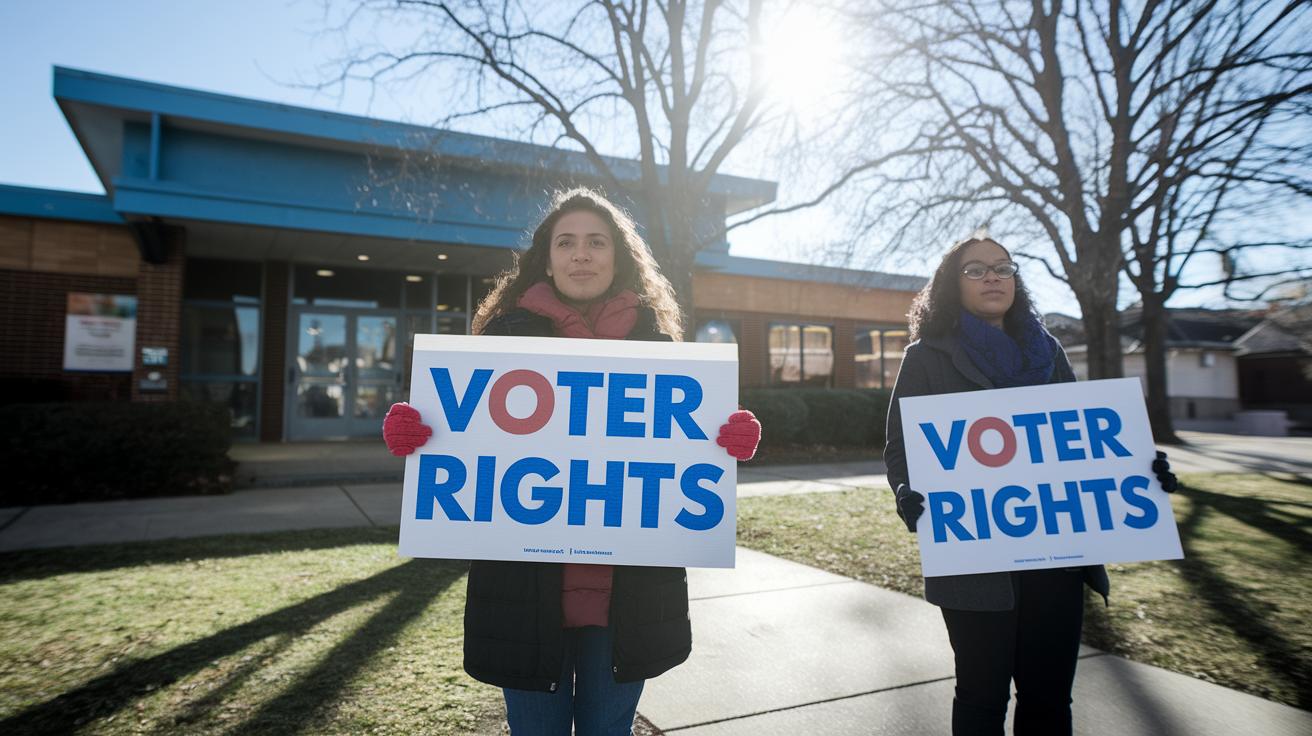
Local grassroots groups and advocacy movements are stepping up to challenge rules that keep voters at bay. In Montana, Native American legal teams are teaming up with Disability Rights Montana and the Native American Rights Fund to fight against SB 490. They are pushing hard for better protections for minorities by taking on laws that limit same-day voter registration and cut off key voting options in tribal areas.
Across the country, organizations like the ACLU, League of Women Voters, and Priorities USA are in the mix, fighting lawsuits over drop-box bans and tough registration rules. Their work does more than just challenge these restrictions, it also helps communities learn about their voting rights and understand how these legal battles affect fair elections.
At the same time, efforts by the RNC and officials in Texas are taking a different path, targeting map-drawing rules and ballot deadline changes. These moves have set off a lively debate and brought more community members into the conversation about elections. Various outreach programs are sparking discussions on why civic engagement matters, urging everyone to support a voting system that truly reflects the will of the people.
Voting Rights Updates: Emerging Trends and Future Outlook
Legislators and election officials are rethinking how we cast our ballots in the years ahead. They’re talking about ideas like adding extra days for voting and letting people register online on the same day. Some lawmakers are even exploring plans to set up independent groups that watch over elections with fairness and balance. Plus, a few states are testing out ranked-choice voting, which could give voters more options and reflect the diverse needs of today's society.
Technology is playing a big role in this shift. For example, mobile voter-ID apps and audit trails backed by blockchain (a secure, digital ledger) are starting to change the way votes are verified in real time. These tools promise more transparency and stronger security for our elections. And in the near future, digital tools might not only help with counting votes but also make the whole voting experience more interactive and easier for everyone.
Final Words
In the action, this piece explored key federal and state reforms, court rulings, and grassroots efforts that shape voting rights updates. It broke down legislative actions along with practical shifts around registration and ballot access.
The updates highlight a drive for fair ballot access and stronger democracy. New legal measures and tech innovations promise a future where every vote is respected, and every citizen’s voice is heard.


