Ever wondered how the global economy manages to keep shining even when times get tough? New numbers say that even with a bit of a slowdown, growth is still coming through, giving hope to families and leaders who plan for the future.
Experts are talking about a 3% growth forecast. This shows that our market can adjust and keep moving forward. In this article, we’ll explore the main trends, the challenges that are emerging, and the smart choices shaping our future economy. Even though there are a few bumps along the way, the overall picture still looks bright.
Global Economy Growth: A Bright Outlook
Global GDP growth shows how much the world’s economy is expanding. It gives us a clear picture of how countries are doing, which helps everyone, from government officials to everyday families, make smart choices about jobs, spending, and investments.
Right now, experts are noticing a gentle slowdown. They predict a growth rate of about 3.2% in 2024, then a little dip to 3.0% in 2025, and down to 2.9% in 2026. Even though the pace is easing, these numbers also prove that our global economy is tough and ready to handle challenges.
Various factors are at work here. Issues like trade tensions, shifts in bond yields, and uncertain policies (meaning unclear government plans) all add to the mix. On top of that, disruptions in supply chains make things even more complicated. Investors and policymakers are keeping a close watch, tweaking their strategies so that our economy stays steady and can even improve over time.
For more insights, check out the latest trends on global markets today: global markets today.
Regional Forecasts and Comparative Growth Analysis
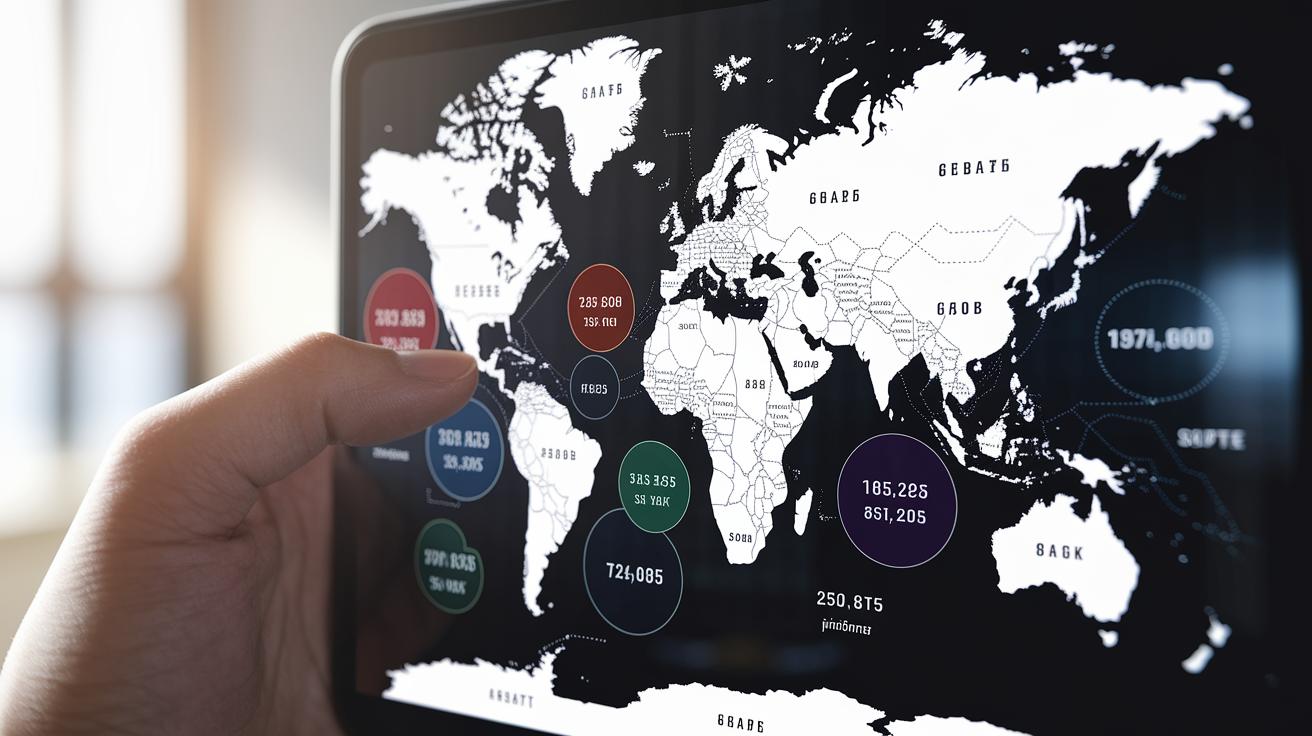
When we look at how different regions are growing economically, we start to see that each area is on its own unique path. Comparing places like the United States, the Euro area, China, India, Latin America, and Sub-Saharan Africa helps us understand why some markets are doing better than others. For example, the US is expected to slip from 2.8% growth in 2024 to 1.3% in 2026, partly because of rising unemployment and inflation. Meanwhile, the Euro area looks like it’s inching forward thanks to smart moves by their central bank. China, on the other hand, is slowing down due to weak retail sales and troubles in its property market, even as India is keeping up a strong pace of growth. These details show us that looking at regions side by side is key to grasping the bigger picture and designing policies that match each region's needs.
This kind of side-by-side review isn’t just about knowing what to expect; it also acts as a helpful guide for investors and decision-makers who are tracking trends in per capita GDP and the effects of local policies. By putting these forecasts next to each other, we can see where growth might stick around and where pressures could hold things back. The table below gives a straightforward look at the growth estimates for these regions, offering a clear snapshot of the economic scene in both established and emerging markets.
| Region | 2024 Growth | 2025 Forecast | 2026 Forecast |
|---|---|---|---|
| US | 2.8% | 1.5% | 1.3% |
| Euro area | , | 1.0% | 1.3% |
| China | 5.0% | 4.4% | , |
| India | , | 6.6% | , |
| Latin America | , | 2.2% | , |
| Sub-Saharan Africa | , | 3.1% | , |
Key Drivers of Global Economy Growth
Government policies, trade rules, and money flows drive how the world’s economy grows. Countries decide their fate by setting tariff rates, adjusting monetary plans, and fine-tuning their budgets. For instance, the US uses an average tariff of 18%, while imports in the EU and goods from India are taxed around 15% and 25% respectively. These moves, along with talks over guidelines like the Taylor Rule and changes in interest rates, create a mix of calm and uncertainty. Plus, supply-chain problems add to rising prices, showing just how important it is for policies and trade rules to keep evolving.
Here are some key factors at work:
- Trade policy and tariff regimes
- Shifts in monetary policy and interest rates
- Fiscal stimulus, deficits, and public spending
- Global supply-chain dynamics
- Cross-border investment and capital movements
- Investments in technology and research ("international tech investment opportunities" – https://baretnews.com?p=28809)
All these forces combine to create a world full of both opportunities and risks. Strong fiscal and monetary choices can spark growth and boost investment, but lingering supply-chain problems and changing trade rules remind us that the journey isn’t always smooth. In truth, while these well-thought-out policy moves open new doors, they also bring challenges that could throw progress off track. So, business leaders, policymakers, and other key players need to stay nimble and ready to adjust as these factors continue to interact and shape our global economy.
Technological Innovation and Digital Economy Growth

The digital economy is a big driver of global growth, opening up fresh ways for businesses to connect and communicate. Digital tools and online platforms are not just making it easier to sell products or interact with customers, they’re also sparking new business ideas. More companies are leaning on technology to simplify their work, boost efficiency, and discover new ways to earn money.
Recent figures from the first half of 2025 show that spending on generative AI (which creates content automatically) and IT infrastructure made up 59% of the real GDP growth in the US. This jump means companies are pouring money into advanced computing systems and improved networks that help speed up digital changes. Private research and development is a big part of this push, giving us a hint of what future tech investments might look like.
Meanwhile, tighter US export controls on advanced tech heading to China highlight the tricky side of sharing new ideas across borders. These rules, meant to stop potential military use, could slow down how quickly digital tools spread around the world. It’s a complex issue that adds another challenge to keeping steady economic progress.
Sustainable Development and Growth Resilience
Growth resilience is all about making an economy that can handle tough times and still keep moving forward. It means using smart, sustainable strategies to build a steady base, even when growth seems uneven or markets wobble. When communities and businesses focus on sustainability, they help save important resources and create bases for future growth. Picture long-term investments in renewable energy, smarter resource use, and well-thought-out urban planning, each step builds a sturdier, more balanced economic landscape.
Policy planning is key to this whole idea. Simple steps, like spreading out supply sources to avoid over-reliance on one market, really help reduce risk. And when governments back green policies, meaning they invest in renewable tech and eco-friendly infrastructure, it makes a big difference. These plans help cushion the economy against sudden downturns while promoting steady, reliable progress through diverse trade partnerships and greener practices.
Forecast Models and Scenarios for Future Global Economy Growth

Big names like the IMF, OECD, and central banks around the world bank on solid forecasting methods. They mix past data with smart econometric models (that's a fancy term for using math to understand trends) and run scenario tests to spot future economic shifts. They look at things like fiscal policies, investment trends, and how countries work together economically. Analysts also run extra scenarios and stress tests just to see what might happen if the assumptions change. For more on these methods, check out global finance.
Recent estimates suggest that global real GDP could hit about 3.0% in 2025 before dipping slightly to 2.9% in 2026. The outlook shows the United States might cut rates twice by late 2025 and ease by a total of 100 basis points in 2026. Meanwhile, Canada might ease to 2.75%, the European Central Bank is expected to keep rates at 2%, and the Bank of England could lower them to 3.75%. These numbers help us get a clearer picture of how changes in interest rates might impact the global economy over the next few years.
Still, these models aren’t foolproof. They can be thrown off by sudden policy shifts, unexpected changes in global trade, or unforeseen economic shocks. With factors like fiscal policy and market sentiment at play, these forecasts are best seen as one possible outcome among many, not a guaranteed picture of the future.
Final Words
In the action, our discussion mapped out how data and policy collide to shape global economy growth, showing the shifts in GDP trends and the complex forces behind them. The piece touched on regional differences and emerging tech trends while noting how trade policies and supply-chain challenges play out on the world stage.
We hope this snapshot offers clarity and sparks further thought about the evolving market landscape. Keep watching as the world’s economic outlook continues to transform for the better.
FAQ
What does the IMF World Economic Outlook 2025 say about global growth?
The IMF World Economic Outlook 2025 shows global growth slowing to about 3.0%, as trade tensions, policy uncertainty, and supply-chain issues temper expansion.
How do GDP growth rates by country vary and rank?
GDP growth rates by country vary widely, with emerging markets often ranking higher than mature economies due to different policy settings and economic challenges.
What is the World Bank GDP forecast for 2030 by country?
The World Bank forecasts that by 2030, GDP growth will differ greatly among countries, with emerging markets expected to post faster gains and advanced economies showing modest increases.
What is the economic forecast for the next five years?
The five-year forecast predicts a gradual slowdown in growth, driven by higher bond yields, shifts in trade policies, and supply-chain disruptions across many regions.
Is the global economy growing?
Global economic growth is confirmed by continuous GDP increases, though the pace is slower now due to factors like policy uncertainty and ongoing inflation pressures.
What is meant by global economic growth?
Global economic growth refers to the yearly increase in the production of goods and services worldwide, usually measured by GDP, indicating rising market activity and living standards.
Which global economy is growing the fastest?
Fastest growth is often seen in emerging markets, where rapid shifts in policy and increased investment drive higher GDP gains compared to more mature economies.
Is the economy actually growing?
The economy is growing, as evidenced by rising GDP figures, yet the rate of expansion is lower now due to ongoing inflation pressures, trade issues, and cautious policy shifts.
What has been the GDP growth by country over the last ten years?
Over the last ten years, many countries have experienced mixed GDP growth, with some achieving robust gains and others facing slower progress because of varying economic policies and global market influences.
What are the GDP growth projections by country for 2025?
Projections for 2025 indicate a slowdown compared to 2024, with advanced economies expecting lower growth rates, while some emerging markets maintain relatively stronger expansion.


