
Ever wonder how massive our global economy really is? Picture this: in just a few years, it could hit $115 trillion, a number that once seemed impossible.
Recent reports show steady growth, with big players like the US and China fueling much of this rise. In this piece, we’ll break down these eye-catching figures and explain what they mean for our world today.
It’s a closer look at a scale that stretches our everyday imagination.
Size of Global Economy: Astounding Numbers
The International Monetary Fund tells us that the world's economy is expected to hit about $115 trillion by 2025 with a growth rate of roughly 3.2% each year. This huge sum shows just how massive and dynamic global markets have become. Experts rely on data from sources like global finance (think of it as the big picture of money flows worldwide) to track these changes and help governments and economists understand our shared economic landscape.
Take a closer look at the big players: the United States is on track to reach a GDP of $30.3 trillion while China is predicted to follow with $19.23 trillion. These two not only lead the list but also form a big chunk of the top 15 economies, which together generate more than 60% of the world's output. Isn't it fascinating how the economic policies and market moves in just a few nations can shape the global scene?
When you compare these figures with the past, the change is astonishing. Decades ago, numbers like these sounded like a wild dream. The rise of digital know-how, a boost in international trade, and strong shifts in policies have reshaped what we once thought was possible. All these factors remind us how our world keeps changing, pushing the boundaries of how we think about money and growth.
Historical Growth of World Economic Output
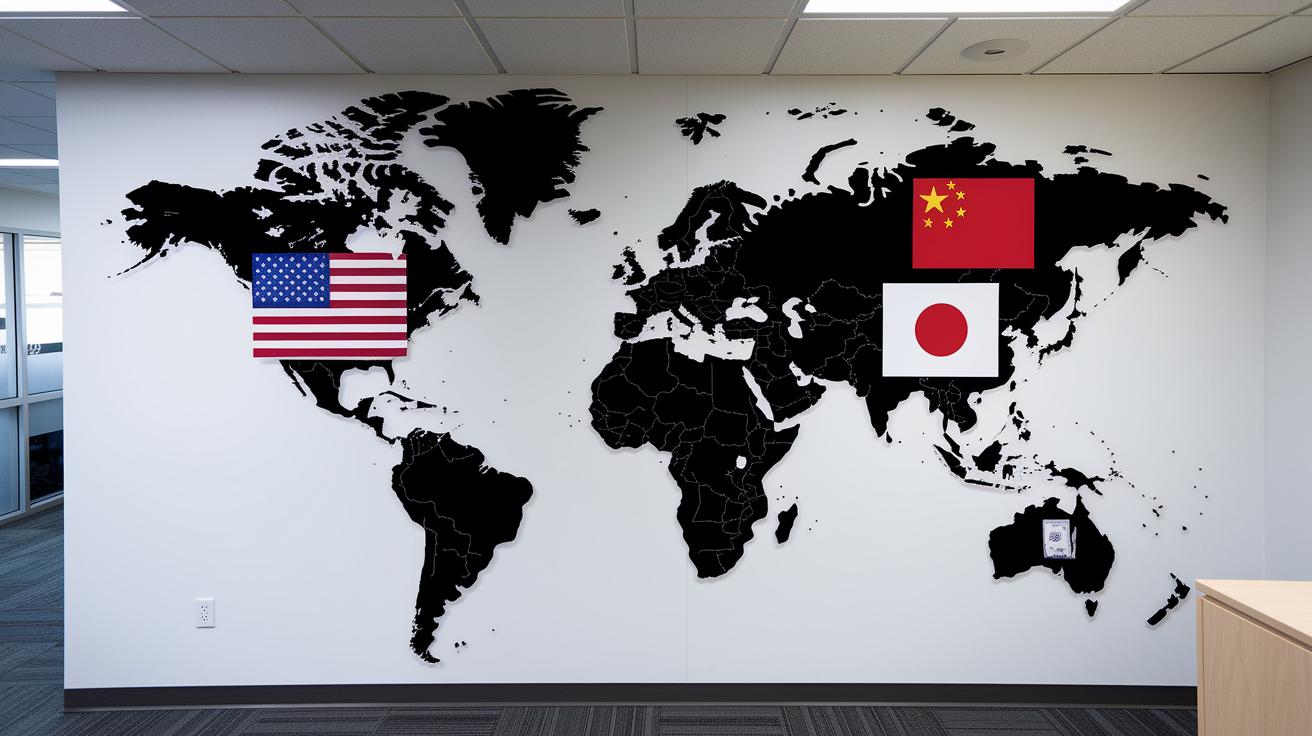
For over 100 years, the United States has set the pace for the global economy. Its steady, innovative growth, built with smart policies and booming industrial output, has shaped modern economic development. To put it simply: American industry has driven advances for more than a century, leaving a mark that still resonates around the world.
China's rise is just as striking. Not long ago, it was seen as an emerging market. Today, China’s GDP has leaped to $14.72 trillion in 2024, thanks to heavy investments in manufacturing and infrastructure. This rapid growth shows how focused efforts can completely transform a nation's economic status.
Japan, on the other hand, stands out with its consistent performance amid worldwide changes. With a GDP of $4.25 trillion in 2024, Japan ranks as the fourth largest economy by purchasing power parity (a measure comparing different countries' purchase abilities). It’s a strong reminder that steady, ongoing progress is just as impactful as explosive growth.
Each phase of these stories reveals how evolving policies and market shifts have continuously redefined the global economic landscape.
Ranking Top Economies in the Global Output
When we rank the biggest GDP contributors, we get a clear look at how large the global economy really is. This snapshot helps us compare different countries and see how they produce goods and services.
| Country | GDP (USD Trillions, 2024) |
|---|---|
| United States | 25.43 |
| China | 14.72 |
| Japan | 4.25 |
| Germany | 3.85 |
| India | 3.41 |
| United Kingdom | 2.67 |
| France | 2.63 |
| Russia | 2.24 |
| Canada | 2.16 |
| Italy | 2.04 |
| Brazil | 1.92 |
| Australia | 1.69 |
| South Korea | 1.67 |
| Mexico | 1.46 |
| Spain | 1.41 |
These leading economies have a huge impact on the world's GDP. They power global markets with their strengths in factories, tech, and services. It's a neat way to see how big trends in the market start to form and shape our global landscape.
Methodologies for Measuring Global Economy Scale
Nominal GDP depends on exchange rates to turn local currencies into U.S. dollars. Organizations like the IMF and the World Bank use standard market exchange rates to calculate it. This gives us a simple snapshot of economic output, but it can shift quickly when currency values change. Imagine a sudden drop or spike in a country's money value, it can change its GDP ranking even when production stays the same.
Nominal GDP
The IMF calculates nominal GDP by using the current market exchange rates. This keeps things straightforward and lets us compare countries easily because everything is measured in dollars. However, it doesn’t consider that prices for the same items might vary a lot between countries. This means that nominal GDP may not show the real buying power people have at home.
Purchasing Power Parity (PPP)
PPP stands for Purchasing Power Parity, and it fixes that shortcoming by taking local prices into account. It adjusts GDP figures to reflect the differences in the cost of living from country to country. For example, Japan shows up as the fourth largest economy when measured by PPP because this method paints a more accurate picture of everyday life. In short, PPP helps us see how much goods and services are really worth in each place.
- Nominal GDP uses market exchange rates and is affected by currency changes.
- PPP adjusts for different living costs across countries.
- Some nations, like Japan, rank higher with PPP compared to nominal GDP.
- PPP offers a clearer view of what people can actually buy in their own country.
Projecting Future Global GDP and Growth Trends
The International Monetary Fund expects the world to grow by about 3.2% in 2025, which means global GDP could hit around $115 trillion. This number is a solid starting point as we look closer at how different countries might fare.
When you break it down, the picture becomes really interesting. The United States is set to grow by roughly 1.6%. On the other hand, China might see an increase between 4.5% and 5%, and India could impress with a growth rate of 6.5% to 7%. Japan, however, is predicted to grow slowly at just 1.2%. Other nations have their own stories: the United Kingdom might go up 1.8%, France 1.3%, Italy 0.9%, Canada 2.1%, and Brazil 2.2%. Additionally, countries like Russia, Spain, South Korea, Australia, and Mexico are expected to land somewhere between 2.4% and 2.9%.
These different growth rates shape our global economy and offer useful hints for leaders making big decisions. It’s a bit like setting a ship’s course: imagine a local industry booming because of a sudden rise in export demand, the small spark can lead to broader changes. Have you ever wondered how one quick change can set off a chain reaction that impacts everyone?
Key Drivers Shaping the Size of the Global Economy
Have you noticed how changing spending habits and new investments are pushing countries to produce more? Lately, both local and global spending have given a big boost to production, making markets more connected and dynamic.
In the United States, a mix of top research universities and a strong entrepreneurial vibe creates a setting where consumers are eager to spend. Over in China, the game plan is all about a strong export model and a booming manufacturing sector. Big projects like the Belt and Road (a major international trade and infrastructure initiative) help China widen its market reach. In Germany, nearly 40% of the country’s economy comes from exports, showing off its strength in making and moving goods on the global stage.
Emerging markets are getting their time in the spotlight too. India, for example, has seen a steady rise in foreign investment since 2014, making it a hotspot for global capital. And Brazil, blessed with natural resources valued at around $21.8 trillion, stands on a rock-solid economic foundation.
All these factors, along with shifts in both consumption and investment, are shaping the size of the global economy today, and they point toward even more growth in the years ahead.
Final Words
In the action, we explored how the global economy is measured, from IMF projections of $115 trillion in 2025 to detailed rankings of top contributors. We then broke down historical growth and compared measurement methods like nominal GDP and PPP. Finally, we looked ahead at future trends and key drivers such as innovation and export strength. Each step paints a clear picture of the complex yet data-driven size of the global economy, inviting us to see a bright future in a world driven by reliable insight and steady growth.
FAQ
How large is the global economy and how much money does it represent?
The global economy measures the value of all goods and services produced. IMF projects a global GDP of $115 trillion by 2025, highlighting continued growth in worldwide output.
What are the 10 largest economies in the world?
The 10 largest economies include the US, China, Japan, Germany, India, the UK, France, Russia, Canada, and Italy. They shape global output and influence international markets significantly.
How does the US economy compare to the world economy?
The US economy, with a projected GDP of $30.3 trillion, accounts for about a quarter of global output, making it one of the most influential and sizable economies worldwide.
Which country ranks as the 5th largest economy in the world?
Based on recent data, India ranks as the 5th largest economy with a GDP of $3.41 trillion, reflecting its rapid growth and rising influence among global markets.
What is the forecast for world GDP rankings by 2025 and beyond?
Forecasts indicate shifting global rankings as economies grow at different rates. By 2025, the top 15 economies will continue to represent over 60% of global output, with emerging markets gaining strength.
Where can I find a list of countries by GDP per capita?
A list of countries by GDP per capita, which shows average income per person, is available from sources like IMF and the World Bank. These rankings help compare living standards across nations.
What are the expected trends for the largest economies in future decades like 2050?
Future projections suggest current leaders may remain dominant while emerging markets grow. Demographics and technology shifts will likely reshape economic power, influencing the rankings of world economies.


