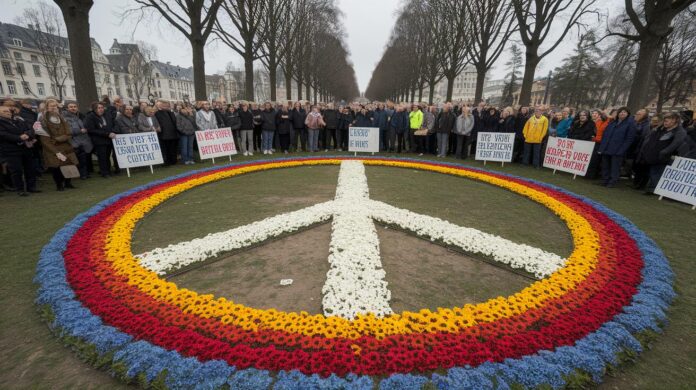
Have you ever noticed how one picture can change your view on politics almost instantly? It's amazing how symbols stir up big feelings and trigger memories. Think of national flags, party logos, or even a catchy poster. They work like a spark that lights a fire, turning complex ideas into clear images we can feel right away. In this post, we'll explore how these images help us understand politics and connect us to our shared values in a way that words on their own can't.
Political Iconography: Iconic Symbols Shaping Perception
Political iconography is all about using pictures and symbols to share ideas and stir emotions in politics. Think of national flags, party logos, or simple images in posters. They give a quick snapshot of a message, making tricky ideas easier to understand.
This art turns picky policies into clear visuals that hit you right in the feels. For example, a poster might mix a strong image with a short, catchy slogan to spark a sense of national pride. Did you know that before computers, campaign teams used hand-drawn materials to connect with people? It’s amazing how pictures were the heartbeat of political campaigns long before the digital era.
Here’s the truth: symbols aren’t just decorations. They play a smart role in sharing core values and beliefs. By using images we know well, political messages become trustworthy and memorable. These visuals pull you in, making you want to learn more, turning a simple glance into active participation.
In the end, these symbols open up a window into the deeper stories behind politics. They help us understand how our leaders craft messages that stick with us in everyday life.
Historical Evolution of Political Iconography from Antiquity to Modern Parties

Political symbols have been with us for thousands of years, from ancient times to the modern day. In early civilizations like Egypt, Greece, and Rome, leaders used images on coins, statues, and public buildings to show their power and identity. For example, Egyptian rulers wore special crowns and carried unique items that made them seem like a link between the gods and the people.
During the Middle Ages, people took symbol use to a new level with heraldry. Knights and nobles displayed coats of arms to tell others about their family, pride, and loyalty. These symbols spoke loudly about honor and heritage, playing a vital role in society back then.
Then came the revolutionary times of the 18th and 19th centuries. Symbols began to stand for ideas like freedom, equality, and patriotism. Banners, pamphlets, and artworks featured simple yet striking images, a rising sun, a clenched fist, that brought people together and reminded them of the struggles and hopes shared by many.
In the 20th century, political parties in the U.S. started using consistent logos and mascots. They adopted familiar shapes and colors that made it easy for voters to recognize and remember them. Campaigns relied on these clear images, showing them on TV, in newspapers, and online, so that the message would reach millions with ease.
Today, the symbols of the past have grown into the well-organized emblems used by modern political parties. They continue to serve as visual shortcuts, merging age-old traditions with today’s values in a political landscape that is always changing.
Iconic Party Emblems: Elephant and Donkey in American Political Iconography
Thomas Nast’s cartoon from 1874 changed U.S. politics forever. It gave the elephant a big role as the Republican mascot, showing strength and dignity. This drawing set the stage for how the party would show its identity for the next 150 years. The Republican elephant, seen as strong and reliable, still stands for steady leadership and firm values. Think of the elephant as a solid monument, steady and sure in the midst of changing political debates.
On the other hand, the Democratic donkey started its journey back in the Jackson era. Once viewed as a simple yet determined animal, the donkey came to symbolize stubborn resilience. Many people saw it as a mark of hard work and the will to fight through any challenge, no matter how tough. Picture the donkey as a determined friend, always ready to stand up against odds.
Over the years, these animal symbols have grown into more than just pictures. They have become part of the very story of American politics, each with a deeper meaning than it seems. The elephant’s graceful strength and the donkey’s spirited grit quickly remind us of long-standing political ideas and voter identities. Their ongoing use in campaigns comforts loyal supporters and helps simplify big policy debates. In short, these emblems let political parties share complex ideas using clear, memorable images that continue to shape how the public sees things.
Symbolic Imagery and Political Propaganda: Persuasion Through Icons

Political symbols pack a real punch. They can teach, unite, and inspire, yet they can also shape opinions in subtle ways. For example, a poster might display a simple icon, like a raised fist, along with a short, bold message such as "Change is coming." This mix can spark strong support.
Take the 2008 U.S. campaign as a case in point. Campaign teams used bright images and matching colors to create excitement and bring communities together. In fact, those visuals helped mobilize millions of young voters. It’s like adding a spark to a fire, small images igniting huge enthusiasm.
At the same time, these images can push a very narrow view. They boil down complex ideas into memorable snapshots, making them perfect for rallies, ads, or social media. They turn big political themes into clear, emotional symbols that stick with you.
Here are a few key ideas behind these symbols:
- A raised fist stands for strength and unity.
- A peace dove signals hope for calm and harmony.
- The visuals from the 2008 campaign show just how much a well-designed image can unite people.
Both protestors and established political groups know how to use this power. At demonstrations, a single icon can become the face of resistance, sending a clear call for togetherness without any extra words. Meanwhile, political campaigns carefully craft visuals to rally support and define an ideology. Icons walk a fine line between informing the public and swaying opinions.
Think of it this way: "The raised fist once symbolized a united call for workers’ rights, showing what people can achieve when they stand together." This dual ability to both inform and influence makes icons some of the most persuasive tools in politics.
Modern Political Iconography: Digital Graphics and Social Media Trends
Digital politics isn’t just about old print ads or TV commercials anymore. Parties and campaigns now use bold, modern designs that really stand out online. Infographics, moving logos, and catchy hashtag images on platforms like Twitter and Instagram bring campaigns to life in a smart, shareable way. Picture this: a logo on your phone that gently changes colors as you scroll. It’s simple, yet it grabs your attention right away.
This shift to digital media lets political messages connect with people in brand new ways. Modern political logos now invite interaction by turning everyday symbols into clickable experiences that draw you in. Designs are made to look great on any screen, whether you’re on a smartphone or a desktop.
Some key trends in this digital evolution are:
- Simple, clean designs that get the message across.
- Animated elements that add a lively burst of energy.
- Hashtag-based visuals that help online communities feel connected.
Party emblems are getting a refresh too. Campaigns now use smart design tools and social media insights to see which images really hit home with voters. A well-made digital graphic not only shows what a campaign stands for but also sparks conversation and rallies supporters quickly.
For instance, think of a tweet featuring a sleek, animated logo paired with a catchy hashtag like #ForwardTogether, inviting people to join a virtual rally. It’s moments like these that show how politics is evolving, making messages feel more real and immediate in the digital age.
Interpreting Political Semiotics: Impact on Public Perception and Voter Behavior

Political symbols tap into deep feelings, connecting ideas with our personal values in ways that plain words often can't match. Studies show that simple images can spark quick emotional and mental reactions, stirring up memories and feelings. Imagine spotting an emblem on a campaign poster that reminds you of joyful community gatherings from your childhood, suddenly, politics feels personal.
Symbols can turn complicated ideas into something easier to grasp. They can pack years of debate into one powerful image. Think of a time when a single, well-placed icon shifted the focus of a national campaign, helping voters feel connected to issues they once thought were out of reach. Moments like these show how political imagery makes abstract ideas more memorable.
But, there’s a flip side. When a symbol is too simple, it might skip over important details and even lead to a biased view. Critics warn that reducing a whole idea to a mere picture can make us miss the full story behind policies or shifts in elections. This balance between clear messaging and potential manipulation sits at the heart of political symbolism.
Here are some key points to consider:
| Key Point | Impact |
|---|---|
| Emotional Reactions | Helps cement policy ideas in the public mind |
| Simplification | Makes complex ideas feel more accessible |
| Risk of Oversimplification | May lead to misunderstandings or biased views |
Researchers have found that voters often rely on these quick visual cues to understand political debates. When familiar symbols appear, they automatically evoke trust and confidence, sometimes even before any detailed discussion starts. This interplay between sights and interpretation shows just how strong the role of visual elements really is in politics.
Final Words
In the action, we witnessed how political iconography shapes our view of politics, drawing from centuries-old symbols to today’s digital designs. We traced the journey from ancient imagery to modern visual tactics, seeing how icons connect past meanings with current messages.
The piece unpacked how key figures like the elephant and donkey have influenced our political dialogue. It reminds us that visual storytelling remains a powerful force in rallying support and sparking debate. Enjoy recognizing the impact of political iconography in everyday life.
FAQ
What are some examples of political iconography?
The political iconography includes national flags, party logos, and images on coins that simplify complex political ideas into clear visual forms.
What are common political symbols with names used by parties?
The common political symbols include well-known icons like the Republican elephant and the Democratic donkey, which quickly establish party identity and core values.
How do political symbols carry their meanings?
Political symbols carry their meanings by using visual elements combined with cultural and historical context to evoke feelings and reinforce shared beliefs.
What images represent democracy symbols?
Democracy symbol images feature icons such as ballots, open hands, or torches that visually express the principles of participation, equality, and fairness in government.
How are liberalism symbols understood and depicted?
Liberalism symbols are understood as representations of freedom, progress, and equality, often drawn in clear, simple forms that resonate with modern progressive values.
What represents conservatism?
The symbol of conservatism is shown through classic images that emphasize stability, tradition, and national pride, reflecting a commitment to preserve established values.
Can you give an example of symbolic politics?
An example of symbolic politics is when leaders use flags or emblems to evoke unity and patriotism, shaping voter attitudes by turning complex issues into relatable symbols.
What distinguishes a symbol from iconography?
A symbol is a single image with a specific meaning, while iconography is a broader system of images that collectively represent complex ideas and ideologies.
What is the simple definition of iconography?
Iconography is the study and use of visual images and symbols to convey political or social ideas, making abstract concepts accessible and relatable to the public.


