
Have you ever wondered if our trust in government rules is really well-placed? Think of it like cooking your favorite meal. Lawmakers bring the key ingredients, while agencies stir in public input to make a balanced system.
Government oversight is more than just paperwork. It’s a process that builds everyday confidence by ensuring everyone, from lawmakers to judges, plays their part to keep things on track.
In this post, we look at how organized steps and clear roles turn complex rules into a recipe for public trust.
Government Regulatory Frameworks: Key Oversight and Compliance Mechanisms
Regulation is one of the main ways our federal government shapes policy. Congress writes laws that turn into agency tasks, the President signs off on these laws, and agencies create rules based on the Administrative Procedure Act. Agencies then invite public comments on their proposals, finalize the regulations, and enforce them, much like following a trusted recipe where lawmakers provide the ingredients and agencies mix in the public’s input to serve a complete dish.
In this setup, every branch of government plays a distinct role. The legislative branch drafts laws, holds oversight hearings, and controls budgets, which gives agencies the power they need. Meanwhile, executive agencies handle everything from drafting rule proposals and collecting public comments to enforcing those rules in the real world. Then, the judicial branch steps in to review decisions through processes like Chevron deference and judicial review, ensuring that every action stays true to the law.
Experts from centers like the Regulatory Studies Center and Columbian College of Arts & Sciences also add valuable insights. They offer theoretical frameworks and constitutional ideas that help refine how we analyze the impact of these regulations. This collaborative effort ensures that the journey from written law to everyday enforcement is both thorough and transparent.
Roles of Federal Oversight Bodies in Government Regulatory Systems

Legislative Branch
Legislators write laws that clearly state the government's goals and then hold oversight hearings to make sure agencies follow these directions. For example, at one hearing, a lawmaker asked, “How will these figures affect public spending?” to dig into cost estimates. They can also adjust budgets if agencies stray from their missions. It’s eye-opening to learn that a representative once pointed out how a small budget tweak can change an entire agency’s focus, urging everyone to look deeper.
Executive Agencies
These agencies work under the rules of the Administrative Procedure Act, a law that guides their process. They begin by drafting proposals, then open them up for public comments, and finally refine the rules by addressing detailed community concerns. One instance even saw an agency change its guidelines after hearing critique about safety issues, showing that active public input can really change the course of policy.
Judicial Review
Courts keep agencies in check by making sure their actions stay within the law. They use principles like Chevron deference, which means giving agencies some flexibility unless they clearly overstep. In one well-known case, a judge ruled that an agency’s interpretation had gone too far, emphasizing that even well-meaning decisions need to stick to legal limits. This serves as a strong reminder of the balance required in regulatory governance.
Interagency Coordination and Policy Implementation in Government Regulatory Practices
Federal agencies are coming together more and more, using groups like interagency councils and task forces to line up their missions and share information. It’s like they’re working side-by-side, using simple, step-by-step methods to manage policies. Research shows that when these agencies join forces, they combine their unique skills to handle problems that don’t fit neatly into one box. It’s a win-win: they work more efficiently and send a strong signal about being accountable to the public. For instance, many have started using joint rulemaking protocols, which act as clear guides to manage every detail of a new policy.
Real-life examples, such as “After Midnight: Prospective Uses of the Congressional Review Act in the Second Trump Administration” and “Biden’s Midnight Unified Agenda,” show us that this teamwork can really change how policies are made. These case studies prove that when agencies set clear, performance-based goals and work together, they can meet the changing needs of today’s regulations and win public trust. In simple terms, strategies like accountability charters and customized coordination models are leading the way for more solid and dependable policy work across the federal government.
Compliance Monitoring Systems and Government Regulatory Enforcement Actions
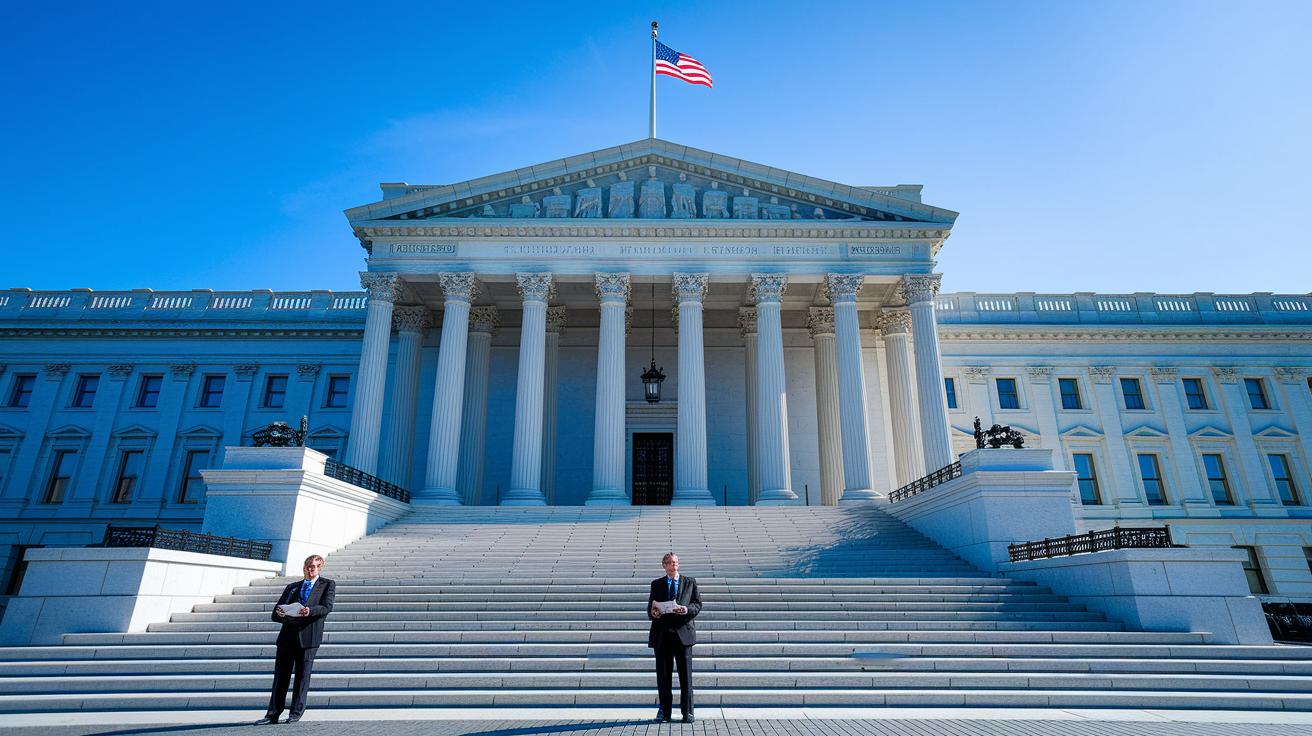
Federal agencies depend on detailed monitoring systems to ensure rules are followed and to guide enforcement actions. They set up clear inspection protocols, track violation rates, and use simple performance metrics (basic measurements of how well things are working) to see if regulations are hitting their mark. These systems let them adjust inspection schedules and enforcement plans along the way, which helps build public trust.
The Federal Government’s Annual Report on the Benefits and Costs of Federal Regulations shows how major rules impact costs and benefits for each agency. Meanwhile, Regulators’ Budget for a New Era dives into where enforcement resources go. Both reports give agencies the data they need to make smart, evidence-based decisions.
| Title | Year | Focus |
|---|---|---|
| Annual Report on the Benefits and Costs of Federal Regulations | [Year] | Cost-benefit analysis of major rules |
| Regulators’ Budget for a New Era | [Year] | Enforcement resource trends |
Metrics-driven enforcement lies at the heart of modern regulatory oversight. The insights from these reports help agencies decide where to use resources and how to enhance monitoring practices. By continuously checking their enforcement activities, regulators can fine-tune strategies and prevent small issues from growing into bigger problems. Isn’t it interesting how clear numbers make a difference in building transparent and accountable rules?
Sector-Specific Government Regulatory Guidelines
The telecom world stays in the spotlight as the FCC works under the Communications Act of 1934 and Section 706 broadband rules. They put out detailed guidance that sets the bar for digital oversight, making sure network service providers deliver quality and fair competition. For instance, recent updates have boosted broadband access in areas that really needed it by setting clear and measurable targets. This way, companies not only meet federal rules but also help build consumer confidence by promising steady, reliable connectivity.
When it comes to healthcare, the FDA keeps a close watch over drugs and medical devices under the Federal Food, Drug, and Cosmetic Act. They can even issue emergency use authorizations when there’s an urgent need, letting vital treatments reach the public quickly. One clear example is when new guidance sped up the launch of innovative medical devices during a public health crisis. Regular rule updates and inspections further ensure that the industry runs safely and transparently, giving patients and providers a strong framework of trust.
Over in the environmental arena, the EPA enforces the Clean Air Act and Clean Water Act with fresh guidelines tailored to today's concerns. Their updated rules on carbon emissions and water quality set stricter limits for factories and tighter standards for wastewater discharge. By sharing these specific guidelines and conducting regular inspections, the EPA shows a strong commitment to protecting our health and natural resources. These measures not only encourage sustainable practices but also boost public trust in efforts to safeguard our environment.
Government Regulatory: Efficient Systems Inspire Trust

Recent reforms in government show how cycles of loosening and tightening rules reshape our daily lives. Leaders use both laws and quick executive actions – think of efforts like “After Midnight” and the “Midnight Unified Agenda” – to deal with new issues as they come up. Sometimes these moves spark debate and lead to uncertainty about the long-term direction of policy. At the same time, inside government, fresh ideas are taking shape. New digital tools and risk-based methods help officials adjust the rules to meet today’s challenges. For instance, revamped notice-and-comment procedures now invite faster public input and let policies change more nimbly.
Experts are weighing in with ideas on how to improve our regulatory system. Researchers suggest setting up digital oversight bodies (teams that monitor rules using computer systems) to work more efficiently and using risk-based models that assess likely impacts before new rules are made. They believe that simpler, smoother processes can cut delays and make things more transparent. In truth, this approach reflects a broader vision: efficient systems can enforce important public policies while also building trust among citizens, ensuring that our regulations stay current in a rapidly evolving world.
Final Words
In the action from law-making to active oversight, the article shows how government regulatory frameworks shape policy at every level. It explains how Congress, agencies, and courts work together, from crafting statutes to enforcing rules, to keep the system running smoothly. The analysis of interagency teamwork and compliance monitoring offers a clear picture of our regulatory world. By understanding these processes, we can appreciate the value in strong, informed institutions. This perspective leaves us hopeful for more responsive and effective government oversight.
FAQ
What are regulatory agencies and can you list examples?
The regulatory agencies are government bodies that create and enforce rules. They include examples like the Food and Drug Administration, the Federal Communications Commission, and the Environmental Protection Agency, all aiming to ensure safety and fairness.
What do regulatory agencies do?
The regulatory agencies establish rules based on laws passed by Congress and oversee their enforcement. They monitor compliance, conduct inspections, and manage public comment processes to maintain industry standards.
What is the definition and role of regulatory commissions?
The regulatory commissions are specialized government bodies that set and monitor rules within specific sectors. They evaluate proposals, enforce standards, and help maintain fair practices in regulated markets.
What does government regulation mean?
Government regulation means the actions taken by agencies to implement and enforce federal laws. It translates statutes into practical rules to control industry practices and protect public welfare.
What is a regulator in government?
A regulator in government is an agency or commission charged with overseeing and enforcing rules. This role involves monitoring compliance, reviewing practices, and ensuring that regulations are followed across different sectors.


