
Are we slowly losing the freedom we once knew? Global data from 52 countries shows that our political and civil rights are getting smaller.
Think about how fake news and new digital tricks are stirring up tough debates among our leaders and everyday people. It almost feels like each click undercuts the trust we once had in the systems meant to protect us.
Have you ever wondered why clear and honest updates matter so much right now? Let’s break it down together and explore how these shifts are shaping our world.
Political Issues: A Comprehensive Overview of Current Debates
Political issues are the topics that shape how governments act and how people feel about them. They range from debates over civil rights to growing worries about fake news. In fact, global freedom has dropped for the 18th year in a row, 52 countries saw fewer political and civil rights while only 21 managed to improve. This change shows a new kind of connection (and sometimes disconnection) between governments and their people.
Over the last ten years, the Global Expression Score dropped by 6 points. This decline matters because journalists and human rights defenders are facing more attacks, making it harder for everyone to speak openly. Misinformation, boosted by new AI tricks like voice cloning and deepfakes (which are computer-made forgeries), spreads like a rumor online, reaching thousands before anyone can check the facts. These digital tricks make it easier for bad ideas to push people apart.
Today’s debates also ask a big question: How much can we really trust the systems meant to protect us? Political parties are at odds, each accusing the other of not providing the right information. As disagreements over which news to trust widen, ensuring a clear and fair discussion becomes more urgent with each passing day.
Before becoming a world-famous personality, a well-known whistleblower revealed that their government’s data leaks stirred political debates worldwide. This shows just how a single event can spark discussions that reach far and wide, reminding us that accurate information is key in shaping these debates.
Political Issues in Government Policy and Reform Cycles

Government policy is in the spotlight these days as heated debates swirl over how to handle our nation’s money. Early in 2025, a fight over the debt ceiling set off discussions about whether to cut $2.5 trillion in spending or to raise the borrowing limit. Lawmakers are caught in the middle, facing pressure from all sides. They’re divided over whether slashing funds for social programs, defense, and government operations is right or if keeping the money flowing is more important. With a funding deadline on March 14, 2025, congressional debates have picked up speed as Washington leaders race to balance competing needs.
Taxes add even more complexity. Many are pushing to keep the 2017 tax cuts, believing these cuts (which lower individual and estate taxes) help keep the economy steady. Meanwhile, proposals to bring the corporate tax rate down to 15% and adjust the state and local tax (SALT) deduction cap have stirred strong reactions. (For a reminder, the SALT cap limits how much state and local tax many can deduct on their returns.) Supporters say these moves could boost economic growth, but critics worry they might lead to reduced government revenue over time.
Immigration still remains a key issue on everyone's mind. Ideas to rebuild parts of the border wall have sparked concerns about rising deportations and social unrest, tapping into a larger debate about how tightly the country should control its borders. At the same time, energy policy talks are shifting focus. Some voices in Washington now favor ramping up oil and gas drilling, a move that would undo earlier incentives designed to promote renewable energy sources.
In public health, debates are mixing with talks on other crucial matters. Lawmakers are examining drug-pricing reforms and changes to how pharmacy benefit managers (PBMs) operate, those are companies that help decide which drugs insurance covers. These discussions have merged with ongoing farm-bill talks, which include adjustments to SNAP benefits and commodity support. It’s a real juggling act as decision-makers work to address multiple urgent issues on a rapidly changing stage.
Political Issues Shaping Civic Engagement and Electoral Integrity
Electoral integrity and civic engagement are under fresh pressure. New voter mobilization tactics and waves of misinformation are shaking up public trust. While just 3.6% of people worldwide are international migrants, asylum seekers jumped over 30% between 2020 and 2022. This surge has sparked a hot debate: Should every resident, regardless of citizenship, have a say in national elections?
Voter mobilization is more dynamic than ever. In 2024, grassroots groups and digital campaigns sparked record turnouts in swing states. Imagine a community group using social media to reach first-time voters, setting off a ripple effect that spread through several districts. It’s a clear sign that creative, community-driven efforts can boost participation even as misleading information continues to cloud the process.
At the same time, modern misinformation tools like AI-generated deepfakes and cloned voices are making voters question what’s real. People wonder whether they can trust news reports or campaign messages, and that uncertainty chips away at our democratic process. In response, officials are discussing new integrity measures. Ideas on the table include post-election audits, switching back to paper ballots, and revamping voter-ID laws. (For more details on these changes, check out the analysis here: https://baretnews.com?p=.)
Some experts are even calling for alternative voting methods. They believe that explaining how proportional representation works (a system that allocates seats based on vote percentages) might clear up confusion and rebuild confidence in our voting process.
All of these efforts point to a growing call for more transparency and accountability in our democracy. Reforming electoral practices and encouraging active civic participation remain key to ensuring that every vote counts and trust in elections stays strong.
Political Issues of Partisan Divisions and Bipartisan Conflicts
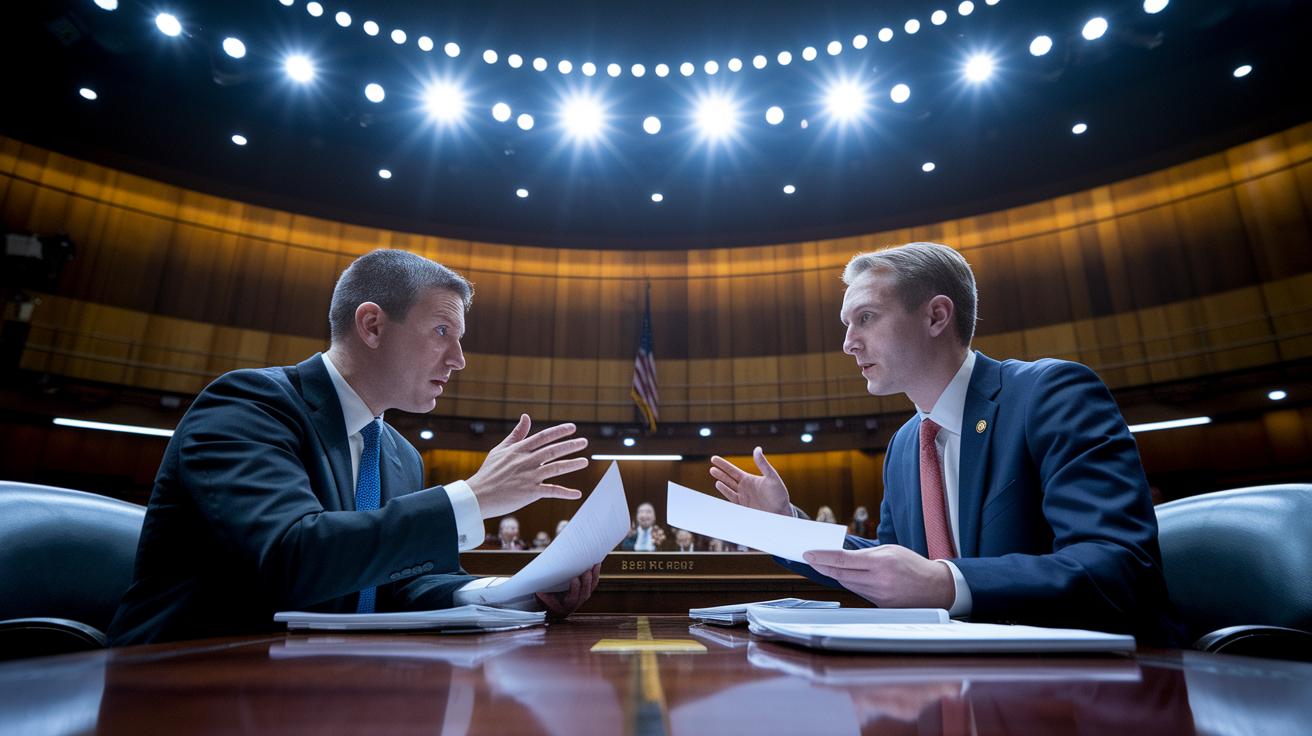
Congressional Republicans and Democrats continue to butt heads, and it shows in our laws. They can’t seem to agree on spending cuts and social priorities. As a result, key policies often get stuck. Sometimes, these clashes even lead to warnings of a government shutdown, with debates split right down the middle between defense spending and domestic programs.
Inside committees, the push for transparency turns into heated arguments. Oversight groups disagree on how to handle ethics questions and investigations. This back-and-forth not only delays important bills but also creates an atmosphere where every decision is under the microscope. Picture a committee meeting filled with tense voices as members argue over who should take the hit for funding cuts and shifting policies.
For example, lawmakers often clash in these ways:
| Scenario | Conflict |
|---|---|
| Budget decisions | Balancing spending cuts with essential social programs |
| Committee Meetings | Heated debates on ethics and transparency |
| Public Forums | Citizens questioning a gridlocked political process |
Media often casts these struggles as clear signs of bias in politics, which only intensifies the perception of partisan infighting. This deep-rooted division makes it tough to move forward on important issues and leaves many folks uncertain about whether their representatives can be trusted.
Political Issues Influencing Social Equity and Public Welfare
Since 2020, billions of people have slipped into poverty, even while the richest five men in the world see their wealth double. It’s hard not to notice the growing gap between those who have plenty and those who barely get by. Imagine waking up to find your own community lacking basic needs while the rich get richer, it’s no wonder people are upset and ready to fight for change.
Health care is also a major worry. Studies on our readiness for future pandemics now warn that we might face three times as many outbreaks if nothing changes. One nurse even said, “Every day feels like a race against time and limited resources.” This kind of stress pushes many to demand stronger policies so everyone can get affordable care when they need it.
Education joins the list of big concerns. Parents and teachers are asking for fairer funding and help with student loans. In many schools, the struggle to get enough resources reflects the larger debate over inequality that we see everywhere.
Social welfare and fair representation are facing tough challenges too. With new restrictions on reproductive rights affecting 40% of women, and estimates that it might take over a century to close the global gender gap, it’s clear that many people feel left out. One local leader put it best: “Our voices must count if we’re ever to see lasting change.” All of these issues are fueling political action aimed at reshaping policies that affect our economy, health care, and education.
Political Issues on the Global Stage: Governance and Conflict

Around the world, governments are facing a tricky mix of political challenges. In 2024, conflicts in DR Congo, Sudan, and Gaza forced many people to flee, sparking harsh humanitarian crises. By the end of 2023, reports showed that 68.3 million people had to leave their homes because of rising violence and unrest. This has only increased the call for better ways to solve conflicts and stronger global rules.
Right now, trade talks are stuck over tariff battles and supply-chain issues. Countries are working hard to find deals that help economies grow while also addressing protectionist pressures. The slow pace of these discussions has brought uncertainty to global markets, making it harder for nations to secure fair and mutually beneficial agreements. Every new round of negotiations reminds us just how linked our economic policies are to wider geopolitical tensions.
Debates over border security have also grown louder. These discussions now reach beyond just the U.S. and Mexico to include challenges at the EU’s outer edges. Leaders are rethinking how to manage migration (the movement of people between countries) while keeping their nations safe. At the same time, many are reviewing international aid policies, especially as funds run short and integrating refugees grows more complex. In adapting to these pressures, governments around the globe are trying to protect those most in need while ensuring national security remains strong.
Political Issues in Media, Technology, and Democratic Trust
AI-powered misinformation, like deepfakes and voice cloning, is shaking public trust. It’s almost as if digital trickery now mimics trusted voices so well that it blurs the line between what’s real and what’s fake. Governments are stepping up their game with AI-driven mass surveillance, watching not just criminals but critics too, which has folks really worried about our privacy rights.
Technology is speeding ahead, and with that, more voices are calling for digital democracy tools, think blockchain voting pilots that promise secure and clear elections. One startup recently showcased a system that logs every vote on a public ledger. This means each vote is traceable without giving away who voted. It’s a strong sign that many are pushing for more accountability in how politics and communication work today.
Experts believe we need tougher cybersecurity rules to guard our voting systems against clever cyber-attacks. But, as we ramp up security, we’ve got to be mindful not to trample on individual freedoms. This challenge grows when every breach chips away at the public’s trust.
Social media often spreads misleading content, muddling what news we can truly rely on. This has both governments and citizens rethinking how we share, check, and trust digital information in this fast-changing world.
At the same time, fresh innovations in communication are reshaping the political scene. Journalists are noting that new apps can verify if a video is real, and policymakers are busy developing ways to tackle digital threats without limiting free speech. It’s clear that as technology evolves, so must the rules and our approach to staying informed and engaged.
Addressing Political Issues: Strategies for Reform and Accountability

Governments are taking clear steps to show how public money is spent. Many now offer open-budget websites where anyone can see exactly where funds go. In some cities, these portals boosted public oversight by 40% in just one year. They’ve also tightened FOIA rules (laws that let people request government details) to keep things transparent.
There’s also a strong focus on oversight reforms. Proposals now include independent ethics boards and stronger whistle-blower protections. Imagine a government worker stepping up with a concern, comforted by solid legal protection. These measures help build trust by showing that any misuse of power will be exposed.
Campaign strategies for change are evolving fast. In 2023, local groups used digital ads and community organizing to push for healthcare and climate bills. Their efforts brought neighbors together and proved that smart use of technology and active engagement can drive real change.
Lawmakers are proving that working together pays off. Bipartisan projects, like joint infrastructure funding, show that collaboration leads to reforms benefiting everyone. With thoughtful planning, new campaign tactics, and stronger oversight, political challenges are being addressed head-on with clear purpose.
Final Words
In the action, we covered a broad sweep of topics that shape our daily lives. Our discussion spanned government policy, social equity, and media's role, highlighting how political issues influence civic engagement and trust. We explored how debates on budget cuts, healthcare, and misinformation drive reform and spark public conversation. Each piece of the puzzle shows how deeply intertwined these issues are and reminds us that every challenge offers a chance for progress. There's hope on the horizon as insightful reforms steer us toward a more informed and fair future.
FAQ
Q: What are some examples of political issues, including examples for students?
A: The political issues include debates over social equity, government policy, voter rights, and misinformation. Students can explore these to understand real-world political conflicts and learn about active civic debates.
Q: What are the current political issues today?
A: The current political issues cover topics like policy reforms, social justice, misinformation, and polarization. These issues shape conversations both locally and globally and influence how people engage with politics.
Q: What are political issues in America, including the biggest controversies?
A: In America, common political issues include healthcare reform, tax adjustments, immigration policies, and social equality debates. These controversies drive the national agenda and impact everyday life across the country.
Q: What are the top political issues in the world?
A: Top political issues worldwide involve international conflict, economic disparities, restricted freedoms, environmental disputes, and electoral integrity. These challenges affect global stability and guide international policy decisions.
Q: What are some political conflicts and social political issues?
A: Political conflicts and social issues often center on partisan debates over spending, voting rights, transparency, and justice reforms. These discussions affect community trust and how societies govern themselves.
Q: What are the five political factors that impact people?
A: The five political factors include government policy, economic decisions, social reforms, international relations, and media influence. Each factor plays a role in shaping everyday life and public trust in political systems.


