
Ever wonder if your wallet can speak louder than your vote? Nowadays, money often overshadows everyday voices, giving wealthy donors and lobbyists an edge. Big donations open doors that many people only dream about, swaying policy decisions for a close-knit few. In this article, we'll explore how spending power reshapes political influence and tilts the playing field. We ask: does money truly control the process, leaving the average voter on the sidelines?
Money’s Role in Political Decision-Making
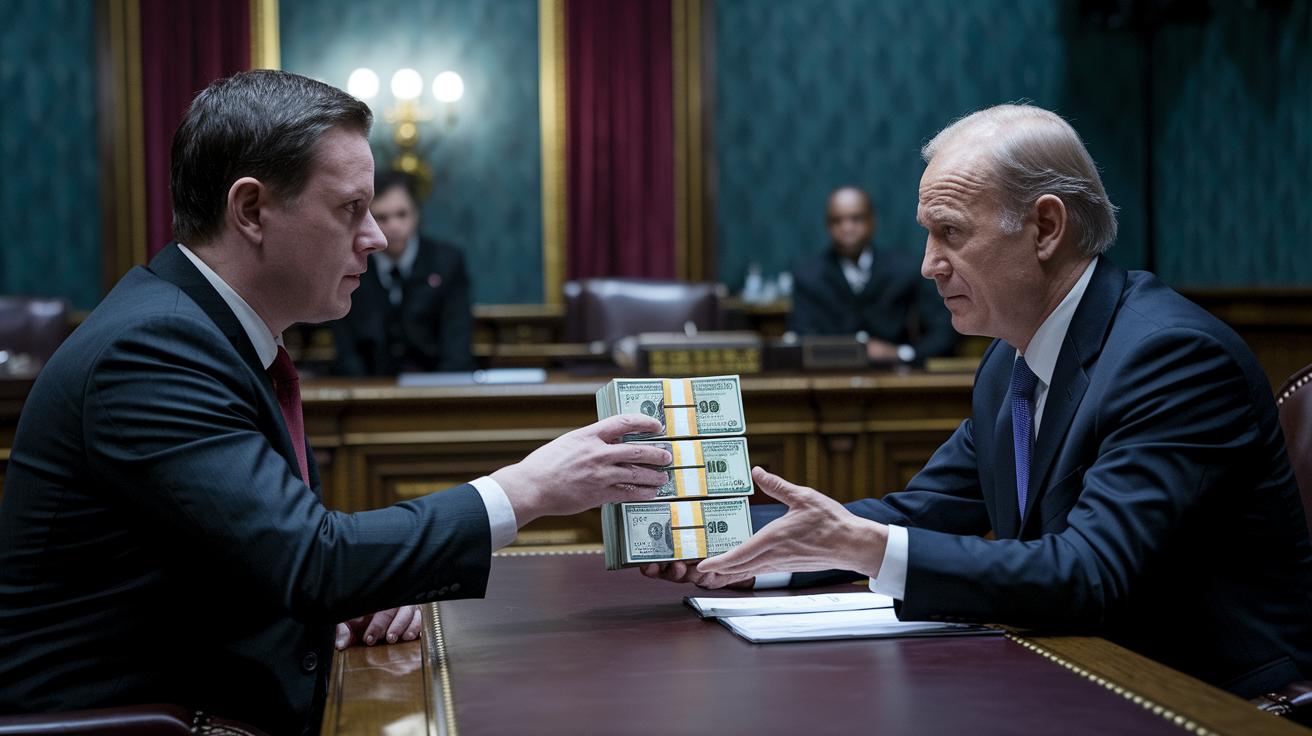
High demand for campaign money gives a few people a big boost when shaping policies. Rich donors and lobbyists turn their cash into real influence, making their voices louder than most citizens’. Experts even say that big-money contributors have more sway now than at any time since a major scandal in the 1970s. For example, one observation noted, "A single donation can open doors in government that many only dream of entering." It’s a clear sign that money often becomes a shortcut to policy influence.
Deep-pocket donors back candidates who will support their goals, and lobbyists with plenty of funds work hard to secure legislative favors. This uneven advantage means that decisions are often made in favor of a small group rather than the wider public. Think about influential figures who use their wealth to drive laws that serve their own interests. Their money can sway votes, push through special bills, and ensure rules favor their circles. In short, financial contributions turn into direct political power, shifting the balance in policy making to favor those with the deepest pockets.
Campaign Finance Influence and Electoral Outcomes
Federal campaigns spend billions, and big money often means big wins. In House races, the candidates who drop the most cash usually take home victory more than 90% of the time, although in 2010, that number slipped to 86%. This makes you wonder: does spending drive the win, or do winners naturally draw more support? Experts say there’s a strong connection, but the spending itself might not be the real secret sauce.
Local political leanings play a huge role too. About 80–90% of election results are shaped by the party bias of a district. Donors tend to focus their cash on areas where the outcome seems almost locked in by local politics. That means the funds often back the favorite, which can skew the race further. For example, heavy funding in strongholds can tip the balance and create an uneven playing field, something many point to as a sign of political bias.
Key points include:
- Federal campaigns involve billions in spending.
- Top spenders in House races win around 90% of the time.
- District partisanship sets outcomes in roughly 80–90% of cases.
- Negative advertising has little effect on changing the outcome.
These insights show that money not only fuels campaign strategies but also steers resources toward candidates who are likely to win, rather than promoting a fair contest. It’s a tricky cycle where financial backing shapes both the campaign tactics and the overall fairness of elections.
Corporate Political Donations and Policy Outcomes

For the past 30 years, corporate donations have steered political policies in ways that often push fees higher and lower the tax money available for public services. Big companies spend heavily to secure rules that work in their favor, leaving everyday people to pick up the tab.
Take this scenario: imagine a business that makes a big donation and then benefits from new rules that cut its costs, while its competitors have to follow stricter regulations. This situation shows us that money really can shape what laws are made.
This influence means that the rules we live by tend to favor business interests over the common good. Companies use their cash to back policies that lower their operating expenses. Here are some of the key effects:
- Higher fees for consumers
- Less tax money for public services
- Laws that protect big companies and concentrate power among the wealthy
All this creates a kind of feedback loop. A donation leads to favorable rules, which help the donor earn more money and then donate even more. It’s a cycle that keeps reinforcing powerful business interests in our political decision-making.
Donor Networks, Lobbyists, and Legislative Impact

Wealthy donors and lobbyists give large sums of money to get behind-the-scenes access to lawmakers. They pay for lunches, meetings, and private briefings that help them push their ideas on new laws. One donor even said, "My contributions open doors to policymakers who shape the rules that affect us all." This shows how money can serve as a direct ticket to influence.
These networks work much like a set of interlocking gears. When one lobbyist secures a meeting with a lawmaker, that connection often leads to more favors for other donors around them. It’s like putting together a puzzle, each donation adds a small piece that builds a bigger picture of power.
Some of the key ways they work include:
| Key Ways |
|---|
| Building personal ties with lawmakers |
| Coordinating donations to support shared ideas |
| Paying for early, behind-the-scenes access |
Lobbyists often act as go-betweens, passing on messages and negotiating on behalf of their donors. One interesting note: a well-known lobbyist once started as a local fundraiser, slowly earning direct access to lawmakers by nurturing personal bonds. This shows that even small beginnings can lead to great influence.
In the end, the more these groups work together and coordinate their spending, the bigger their influence on lawmaking. As a result, policy choices increasingly reflect the desires of a few rather than the interests of the broader public.
Regulatory Framework, Transparency, and Reform Proposals

For over 30 years, research from Democracy North Carolina has highlighted serious oversights in campaign spending checks. The current rules miss many details of campaign donations, letting secret deals and behind-the-scenes lobbying slip through. This mess makes it tough for everyday folks to see exactly who is funding candidates and influencing policy.
In reaction, fresh reform ideas are getting a lot of support. Lawmakers and advocacy groups are asking for clearer rules that record every donation and make those records public. They also suggest public funding options to cut down candidates’ need for big, private gifts, hoping to level the playing field in elections. If you’re curious, you can check out an analysis of recent electoral law changes to learn more about how these reforms are evolving.
Another creative idea is moving toward voter-owned elections. In this setup, citizens could chip in modest amounts, counterbalancing the heavy influence of large donors. By stepping away from big private contributions, the aim is to give every dollar and every vote equal weight. There's also a rising call to step up enforcement, with tougher audits and stronger penalties for any reporting mishaps, to make sure everything is held to a high standard.
Key reform measures include:
| Measure | Description |
|---|---|
| Donation Disclosure | Every donation must be clearly recorded and publicly accessible. |
| Public Funding | Offer alternatives to reduce candidates’ dependence on major private gifts. |
| Voter-Owned Elections | Enable citizens to contribute modest sums, balancing donor influence. |
| Improved Oversight | Implement stricter audits and harsher penalties for reporting errors. |
These proposals are designed to bring more transparency and better control to campaign spending, paving the way for a more balanced and accountable political funding system.
Case Studies: Billionaire Political Power and Wealth-Driven Outcomes

One clear example features a billionaire who spent $50 million on TV ads for several races. Still, less than half of those contests brought home a win. When you invest millions, you expect an easy victory. But the truth is, even huge sums don’t guarantee success. His big spending didn’t push most of his chosen candidates over the finish line, showing that high-dollar influence can be a risky gamble.
After seeing these results, his team decided to change their game plan. Instead of sticking with expensive TV ads, they started focusing on referendums, state races, and long-term investments. By zooming in on local contests and planning for the future, they hoped to make every dollar count. One strategist even said, "Switching from national TV to local outreach is like swapping a wide-angle lens for a zoom lens, suddenly every detail matters."
Here are a few lessons from this case:
| Lesson | Insight |
|---|---|
| Big Spending ≠ Guaranteed Victory | Even millions don’t promise wins. |
| Local Focus Works | Local efforts and long-term plans can boost your odds. |
| Money’s Complex Impact | Spending must match local conditions and voter interest. |
This study shows that billionaire political power can drive change but also bring surprises. Even with enormous financial backing, you still need smart strategies to tackle local challenges and truly shape election outcomes. Isn't it interesting how money and local insight must go hand-in-hand for success?
Final Words
In the action, we saw financial contributions shape decision-making. Wealthy donors and lobbyists steer campaigns and influence policies, while corporate donations often secure favored reforms. Donor networks and strategic spending echo through both elections and policy outcomes. Regulatory efforts and reform proposals seek to level the playing field. All these angles invite us to ask: how does money influence politics? There's hope as discussions and reforms continue to empower fairer competition and more accountable leaders.
FAQ
How does money influence politics?
The influence of money in politics is shown by the way vast sums steer campaigns, decision-making, and policy outcomes while giving wealthy donors and lobbyists a stronger voice in shaping laws.
What problems are associated with money in politics?
The problems with money in politics include a concentration of power in the hands of deep-pocket donors, creating imbalances in campaign success and leaving regulatory gaps that allow unchecked influence.
What examples show the effect of money in politics?
The effect of money in politics appears in campaign finance disparities where high spending mirrors electoral success, corporate donations steer policy, and billionaire contributions target races deemed most winnable.
How do billionaires influence politics?
Billionaires influence politics by allocating large sums for media ads, targeted campaigns, and strategic funding that buys legislative access, ultimately increasing their sway in political and policy decisions.
What facts highlight money’s impact on politics?
The facts about money’s impact on politics reveal that financial resources often eclipse other election factors, skewing results and amplifying the power of those with deep funds in the political arena.
How can the role of money in politics be reduced?
The role of money in politics can be reduced by adopting stronger disclosure laws, offering public funding options, increasing oversight, and making campaign spending more transparent.
Why should corporations be allowed unlimited funds to influence politics?
The view that corporations should give unlimited funds rests on free speech arguments, though it also sparks debate over fairness and the risk of granting too much power to financially strong entities.


