
Imagine the global economy quietly navigating rough waters while still making steady progress. Experts now expect a 2.9% rise in 2025, even as changing policies shift the way we trade and spend. In the United States, growth is predicted to slow from 1.5% to 1.0%, while emerging markets continue to show strength. This forecast makes us pause and consider how steady, measured progress might shape our investments and future plans, offering a reassuring glimpse of stability in uncertain times.
Global Economic Outlook: Forecast Highlights for 2025 and 2026
The global economy is expected to grow steadily even if some challenges slow things down a bit. Experts predict that world growth will hit 2.9% in 2025, then ease to 2.5% by the last quarter of the year. This shows us that while the economy is still moving forward, the speed is gradually reducing because of changes in trade and government spending policies. For example, emerging markets are holding strong, but richer countries might face slower growth due to less spending by consumers and businesses.
Inflation is also taking a gentler turn. It is expected to drop from 2.4% in 2024 to 2.1% in 2025, and then to just 2.0% in 2026. This shift comes from lower energy prices and a more careful environment for demand. But, the numbers look a bit different depending on the region. In the U.S., growth is projected to be modest at 1.5% in 2025, falling to 1.0% in 2026, while places like the Euro area, China, India, and Japan are on different paths, each with its own pace and challenges.
| Region | 2025 Forecast | Q4 2025 | 2026 Forecast |
|---|---|---|---|
| World | 2.9% | 2.5% | N/A |
| U.S. | 1.5% | N/A | 1.0% |
| Euro area | 1.3% | N/A | 1.8% |
| China | 4.5% | N/A | N/A |
| India | 6.4% | N/A | 6.9% |
| Japan | 1.0% | N/A | 0.5% |
These forecasts help shape decisions by policy makers and investors alike. Lawmakers adjust their plans on money and taxes based on these numbers, and investors fine-tune their long-term plans by looking at the growth and inflation trends in each region.
Key Indicators Shaping the Global Economic Outlook

Economic metrics like inflation, trade balances, and labor market data give us a clear view of the global economy’s health. These numbers help both policymakers and investors see what’s working well and what might need a closer look.
Inflation trends play a key role here. For instance, in the Eurozone, inflation hit 1.9% in May compared to the same month last year. This rate is the lowest we’ve seen since September 2024, which tells us that prices are not rising as quickly as before.
Take trade balance insights in the United States. While the country runs a trade deficit when it comes to goods, its services sector is doing well. This mix creates a current account gap that hints at changes in both consumer habits and business spending.
Commodity prices are also shaking things up. Markets remain unpredictable due to issues like fragile supply lines and ongoing geopolitical tensions, which can make prices bounce up and down unexpectedly.
Financial stability is another big factor. Global public debt stands at around 91% of GDP, a number that puts a lot of pressure on economies. This forces countries to be extra careful with their spending and fiscal policies.
When we look at labor market dynamics, the U.S. offers an interesting story. Strong payroll growth in areas like health care and restaurants shows promise, even though overall workforce participation has dipped. This raises questions about how sustainable this growth is in the long run.
Corporate earnings have also felt the pinch. In April 2025, a sharp drop in imports, partly due to increased U.S. tariffs, slowed down Q2 GDP. This slowdown suggests that companies might struggle with profits in the near future.
In essence, keeping an eye on these indicators gives us a good sense of what to expect from the economy. Analysts rely on these data points to fine-tune forecasts and plan for the future. It’s like having a detailed roadmap that helps both decision-makers and investors spot early signs of change.
Policy Responses in the Global Economic Outlook: Monetary and Fiscal Strategies
Policy decisions play a huge role in steering how fast economies grow and keeping inflation in check. Money managers and government officials are rethinking their moves as global trends shift, facing challenges like trade tensions and wobbly currencies.
Federal Reserve Strategy Versus Growth and Inflation
The Fed is now handling interest rates with a careful balance in mind. They’re trying to support growth while keeping an eye on rising prices. For example, recent rate changes came after tariff proposals slowed down the U.S. economy. In short, the Fed’s moves are meant to smooth out the short-term bumps from tariffs while keeping long-term stability in focus. It’s like taking a brief pause on tougher tariff measures to help growth, even while inflation stays on the watch list.
ECB Easing in Face of Declining Inflation
Over in Europe, the European Central Bank got proactive when Eurozone inflation fell to 1.9% in May. By lowering rates, the ECB hopes to boost spending and encourage investment. They’re ready to take more supportive steps if inflation stays below target, showing their commitment to getting the economy back on track. It reminds you how policymakers sometimes adjust their game plan to nudge the economy forward.
Central Bank Approaches in Asia-Pacific
In Asia, the story isn’t one-size-fits-all. The Bank of Japan is beginning to return to more normal policies, with a potential rate hike on the horizon early next year because of cautious optimism about domestic recovery. Meanwhile, China’s central bank is keeping things friendly to help out when local demand is slow. Overall, the high global public debt, hovering around 91% of GDP, means many governments have little room to add extra fiscal stimulus, so their ability to ease policies further is pretty limited.
Global Economic Outlook by Region: Comparative Growth Analysis
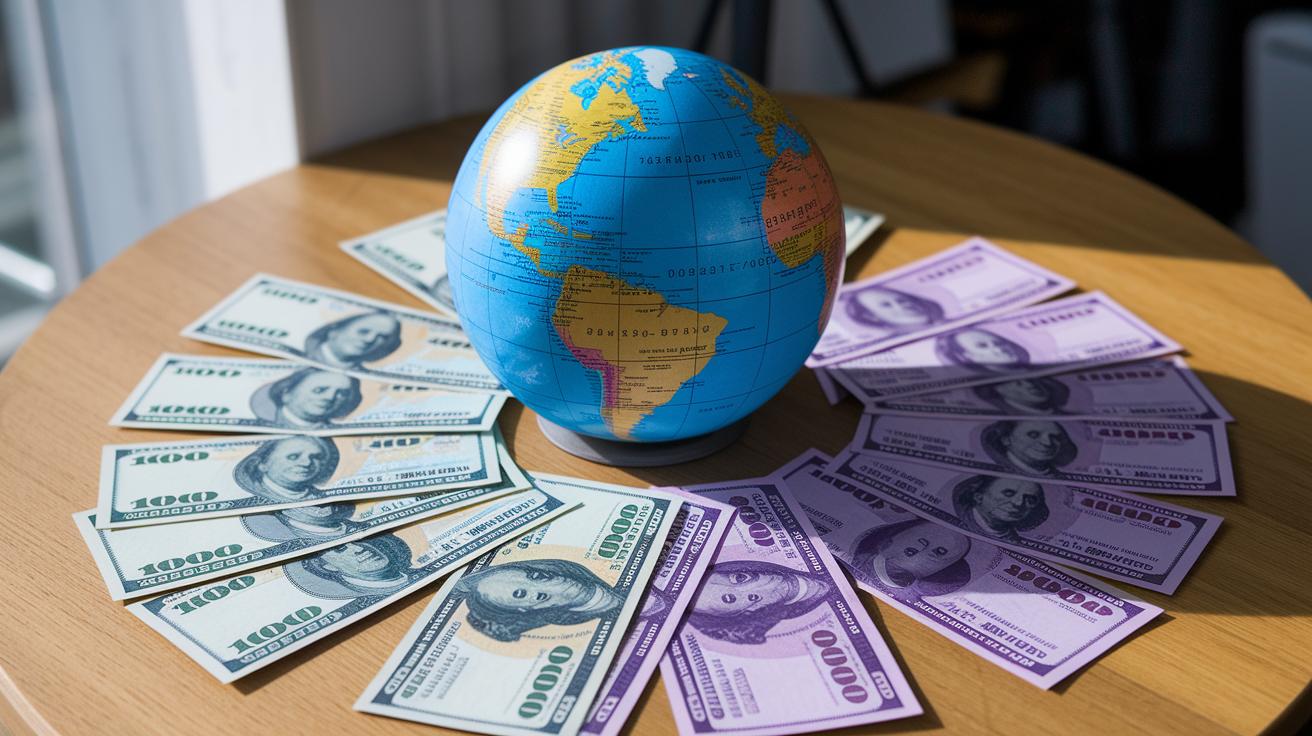
Recent forecasts show that different regions are following distinct paths. Advanced economies face some tough challenges, while emerging markets lean on strong internal demand. In some areas, growth is slow because big changes are needed. In others, a boost in local spending and solid sectors help drive progress.
In the United States, the growth rate is clearly slowing. It’s set to drop from 2.8% in 2024 to 1.5% in 2025 and then fall to about 1.0% in 2026. Lower immigration and rising trade costs make everyday spending and business investments tougher. Still, you can see some areas doing well despite the challenges.
The Euro area shows a modest improvement. Growth is expected to move from 0.7% in 2024 up to 1.3% in 2025 and 1.8% in 2026. Easier monetary policies and efforts to boost exports are helping the economy bounce back, even though problems like weak exports and internal issues persist.
In China, the economy is also slowing down a bit. The GDP is predicted to grow around 4.5% in 2025. A cooling housing market and less demand at home slow things down, but a steady manufacturing sector and strong exports still offer support.
India stands out among emerging markets. Forecasts expect growth to reach 6.4% in 2025 and climb to 6.9% in 2026. Solid local demand and growing tech investments keep optimism high, even as challenges like strict regulations and inflation need to be managed.
Latin America is likely to see moderate acceleration. Overall trends look positive, yet countries such as Brazil and Mexico face political uncertainties and tight budgets. On the bright side, strong commodity sectors help cushion the impact of these issues.
ASEAN is on track to maintain a stable growth rate, holding steady at about 4.6% from 2024 through 2026. Strong domestic markets and a revived tourism sector play major roles, even though the region remains a bit vulnerable to changes in global trade.
Sub-Saharan Africa is expected to grow at about 3.1% in 2025, with inflation easing from 18.1% to 13.4%. Despite a heavy reliance on resource exports and challenges like supply limits and political instability, there is cautious optimism about the future.
In short, advanced economies are facing tough structural issues, while emerging markets benefit from robust domestic demand. This mix of challenges and strengths means each region will need its own smart strategies to shape future policies and investment plans.
Global Economic Outlook Risks: Geopolitical and Structural Challenges
Tensions between the U.S. and China can create surprises that go far beyond simple trade disputes. Instead of just talking about tariffs, experts now worry that sudden policy changes might force businesses to rebuild their supply chains. Imagine one country changing its export rules and setting off waves across global logistics, like dropping a pebble into a calm pond.
Another concern is the rising public debt, which sits at 91% of GDP. This heavy debt load can limit how much a government can spend and may start a chain reaction that slows down consumer spending and growth. It’s a bit like a row of dominoes, when one falls, others might follow.
Supply-chain slowdowns and sudden jumps in raw material prices are now under close watch due to outside pressures. Earlier reports mentioned occasional hiccups in supply, but now the focus is on how continued disruptions could push prices higher and unsettle the economy. When supply chains lag behind, even everyday items can get costlier, reminding us just how connected the global market is.
Global Economic Outlook: Steady Growth Ahead

Innovation and sustainability have become strong shields against economic challenges. In today’s world, where political shifts and changing consumer habits often shake up the markets, companies are now leaning into new technologies and clean energy to help lower their risks. For example, businesses that invest in renewable energy and efficiency improvements tend to do better when times get tough. Remember this surprising fact: "Before becoming a world-renowned scientist, Marie Curie used to carry test tubes of radioactive material in her pockets, unaware of the dangers that would later shape her legacy." It’s a reminder that bold ideas can turn risks into new opportunities.
Another bright spot is sustainable finance, which builds resilience. More companies are putting money into digital finance tools to streamline banking and trade. This modern approach not only makes things clearer but also creates a space where investing with an eye on environmental, social, and governance (ESG) factors is catching on with both big institutions and everyday investors. As research and development grow, digital finance is reshaping old systems and supporting steady economic progress. Essentially, more innovation and sustainable practices mean growth and fewer risks, even when markets are shaky.
Now is the time for smart moves. Business leaders should focus on three main strategies: using flexible pricing, increasing profits, and stepping up digital investments. These steps can help them tackle global uncertainties while discovering new opportunities in renewable energy and green technology. In truth, the time to act is now.
Final Words
In the action, we explored the global economic outlook through growth projections, inflation trends, and region-by-region comparisons. We broke down policy responses from major economies and unpacked the key indicators driving market shifts.
Our analysis linked budget constraints and fiscal measures to future investment strategies and policy decisions. This overview offers clear insights into how trends and challenges could shape everyday financial decisions, sparking thoughtful dialogue ahead. Stay optimistic as the outlook continues to evolve and inform policy and business strategies.
FAQ
What does the global economic outlook indicate for recent and future years (2022, 2025, 2030)?
The global economic outlook shows trends from past to future years. It highlights 2022 data, a 2025 projection of around 2.9% global growth, and longer-term views into 2030 to guide policy and investment decisions.
What is the IMF World Economic Outlook and its 2025 projection?
The IMF World Economic Outlook offers a detailed forecast of global growth, trade, and inflation. Its 2025 projection provides insights on moderate gain scenarios that help governments and investors plan economic strategies.
What does the economic forecast for the next 5 years suggest?
The economic forecast for the next 5 years suggests steady yet modest global growth. It indicates slower progress in advanced economies and relatively higher expansion in emerging regions, aiding both policy planning and investment focus.
What insights are offered by the World Bank Global Economic Prospects report?
The World Bank Global Economic Prospects report provides regional assessments of growth, inflation, and financial trends. These insights support decision-making on development policies, trade adjustments, and economic stability.
What is the current global economic situation and immediate outlook?
The current global economic situation is characterized by gradual growth and easing inflation. Projections for 2025 reflect mixed performance, with emerging markets growing faster than mature economies, which shapes near-term economic expectations.
Who publishes the global economic outlook?
The global economic outlook is published by well-known institutions like the International Monetary Fund and the World Bank. These organizations compile extensive data to support reliable policy and investment decisions worldwide.


