Have you ever stopped to wonder why, in a world full of promise, so many still get left behind? Nearly one in four people struggles to get basic healthcare, while a small group enjoys great wealth.
Yet hope is on the horizon. By rethinking how we share our resources and pushing for fairer policies, we might change things for the better. In this piece, we'll dig into these struggles, share some eye-opening numbers, and explore a way forward, a future that works for everyone.
Understanding Global Inequality: Definition and Scope
Global inequality is the idea that resources, opportunities, and power aren’t split evenly among the nearly 8 billion people in the world. Imagine a pie where only a few people get the biggest slices while most folks end up with only a little.
For example, nearly one in four people doesn’t have access to basic healthcare. This striking fact shows just how unevenly benefits are shared.
This big idea touches on many areas. Economic differences mean some people earn much more while others struggle. Social gaps appear in who can get a good education or proper healthcare. Politics also plays a part, since who gets to make decisions in communities and governments can shape everything from local rules to global relationships. Even environmental issues show clear differences, as not all regions share resources or face climate change in the same way.
Understanding these different areas is key for making fair policies and helping communities grow. When leaders see just how much these issues affect daily life, they can work to shift power and resources to those who need them most.
Global Inequality Trends: Key Statistics and Metrics
When you really stop and look at it, global inequality reveals stark numbers that tell a story of struggle but also of hope for change. Millions face significant challenges with health, wealth, and even the effects of our environment. It's hard to miss that nearly every four seconds someone dies from causes tied to not having basic needs met.
In truth, the Covid-19 crisis made these gaps even wider. Billionaires saw their fortunes soar, 2,755 new fortunes emerged during the pandemic, with a new billionaire every 26 hours. It makes you wonder how such wealth can pile up so fast, leaving many people behind.
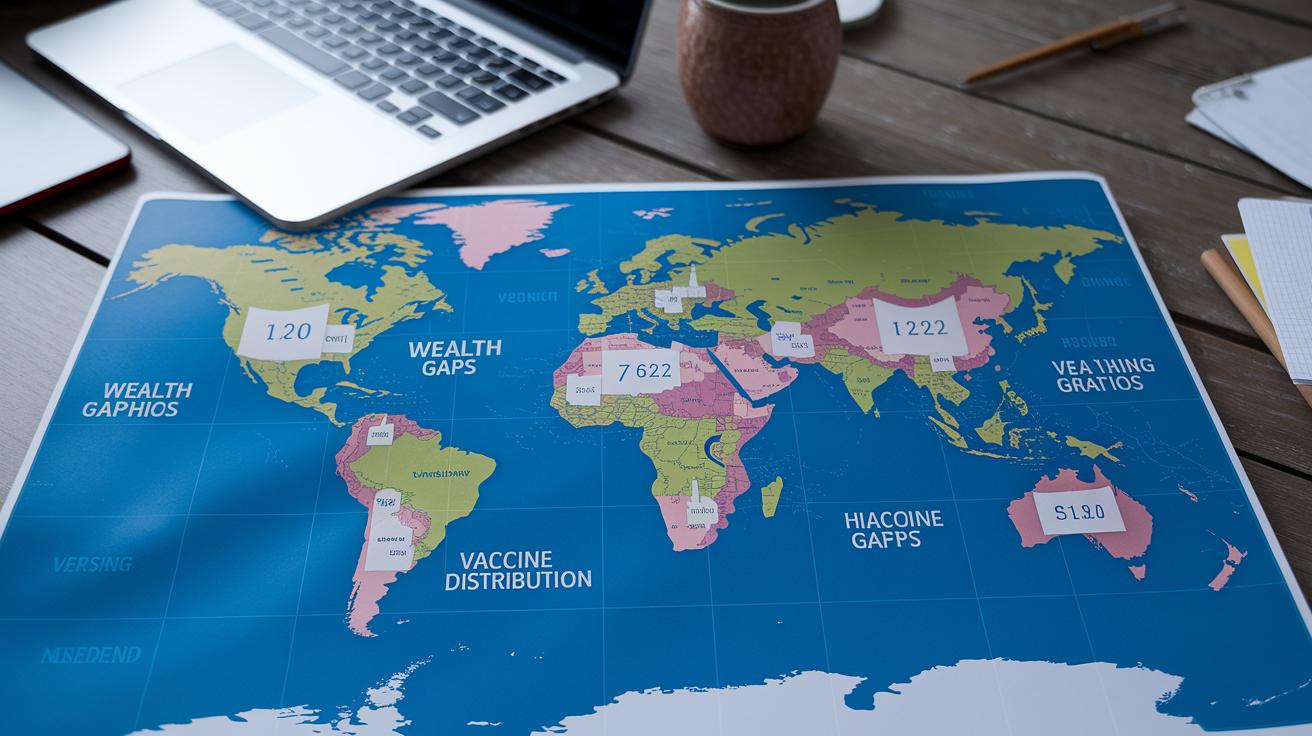
Then there’s the vaccine picture. More than 80% of vaccine doses have gone to G20 countries, whereas low-income nations got less than 1%. It’s a clear sign that health protection is still a steep climb for those on the margins. And if that wasn’t enough, rich nations are responsible for about 92% of all historic emissions, placing the heaviest burden on communities already on the edge.
| Metric | Value | Implication |
|---|---|---|
| Deaths per Day | 21,300 | Daily loss due to inequity-related causes |
| Billionaire Wealth Surge | 2,755 during the pandemic; one every 26 hours | Extreme concentration of wealth |
| Vaccine Distribution Gap | Over 80% in G20 vs. under 1% in low-income countries | Sharp inequality in health protection |
| Historic Emissions Share | 92% | Disproportionate climate impact by rich nations |
These numbers aren’t just statistics, they spark important debates on how to shape policies that work for everyone. When you see the scale of the problem, it becomes clear that creating a fairer system isn’t just a dream; it’s an urgent necessity.
Measuring Global Inequality: Methods and Indices
Experts use different ways to measure global inequality. They give us a quick, clear view of how resources and opportunities are unevenly shared around the world. These methods show us the income gap in different countries and among various groups. Each one offers a different angle, from general income spread to spotting differences between the richest and poorest. Taken together, they help us understand how income gaps change and guide discussions about new policies.
Gini Coefficient
The Gini coefficient is a tool that looks at how income is divided among people. It compares the total income people earn with the percentage of the population. A lower score means income is spread out more evenly, while a higher score points to a bigger gap between high and low earners. Think of it like seeing if everyone gets a fair slice of the economic pie.
Palma Ratio
The Palma ratio focuses on the share of income that the top 10% earn versus what the bottom 40% earn. This measure shines a light on the big differences between the very rich and the very poor. It tells us that while the middle class might struggle, the real inequality often shows between these two extremes.
Theil Index
The Theil index takes a closer look at inequality within different parts of a country. It breaks down overall inequality into parts that come from differences inside groups versus differences between separate groups. This helps us understand the many layers of wealth and how power is spread out in society.
Drivers of Global Inequality: Economic, Social, and Environmental Factors

Market-driven trade rules and financial practices usually tip the scale in favor of the well-off. When regulations are crafted mainly to benefit big corporations and high earners, the divide grows wider between those with plenty and those with little. For example, small businesses often find themselves up against multinational giants that dominate global markets while advocating for less strict rules that serve their interests.
Corporate might plays a big role in stacking up wealth too. Often, profits stem from financial investments rather than from the actual production of goods or services. This trend means that resources flow toward already wealthy sectors. In plain terms, when policies favor the rich, workers get left behind, and efforts to share income more fairly fall short, deepening economic hardships in struggling communities.
Climate injustice is another major factor fueling global inequality. Rich nations, responsible for 92% of past emissions, continue to burn fossil fuels at high rates. This unequal burden speeds up the depletion of resources and leaves poorer regions to bear the harsh effects of climate change, from extreme weather to difficulties in securing food and shelter.
Social issues add another layer to this problem. Women, girls, and marginalized communities often face harsher conditions, with less access to quality healthcare, education, and opportunities to participate in decision-making. With fewer chances to improve their lives, these groups can remain caught in cycles of poverty for generations.
Policy decisions further lock in these disparities. Tax laws, subsidies, and regulatory frameworks are often structured to serve the powerful. When industries influence the very rules meant to keep them in check, a situation known as regulatory capture, it becomes even harder to establish a fair playing field for everyone.
Impacts of Global Inequality: Human, Economic, and Political Consequences
Inequality is changing how people get care and is even pushing communities to rework old systems. Local health workers say clinics are now meeting unique neighborhood needs to rebuild trust. One worker mentioned, "Our clinics are now focused on what the community really needs, which is gradually bringing back confidence in public health."
Economic struggles now go beyond just slow growth. New studies reveal that the growing gap between the rich and the poor is stifling local creativity and cutting back on important investments that help neighborhoods bounce back during hard times.
Political stress is on the rise as people demand fair treatment. Many are rallying for a government that listens more and spreads resources evenly. This shift means citizens are starting new groups that call for accountability and a say in decisions that affect them.
Around the world, crises are forcing communities to try fresh ways to bounce back. Local leaders are introducing smart, targeted changes that address deep-rooted issues. One leader noted, "Directly tackling these gaps has sparked new ideas that better prepare our communities for future challenges."
Addressing Global Inequality: Policy and Collective Action

Governments can help change how resources are shared by using actions like progressive taxes, universal social services, and debt relief. These steps let them shift funds into programs that support communities, build public infrastructure, and create real change. It’s like having a toolbox where each tool plays a part in making society fairer.
At home, changing tax rules is a strong way to make a difference. When wealthier folks pay a fairer share, there’s more money for better healthcare, schools, and housing. This shift means that those who need help the most get the kind of support everyone deserves to thrive.
On a global scale, working together opens up new ways for fairness. Countries can join forces by fixing trade rules, forgiving debts for poorer nations, and sharing vaccines more equally. These actions bring a sense of world community, cutting the gap between richer and lower-income countries and sparking a hopeful spirit.
Businesses and community groups matter too. Companies can ensure fair pay and clear financial reporting, while local groups help keep a check on leaders. When these voices join with government efforts, they spark creative solutions that truly reach people facing inequality every day.
Real change means rethinking who holds power and where resources go. When policies match the needs of everyday people, we build a world where everyone has the chance at a stable, secure future.
Final Words
In the action, we see global inequality defined as the uneven spread of wealth, healthcare, and opportunities. The discussion took you through key statistics, ways to measure these gaps, and the forces behind them, from economic imbalances to environmental and social shifts.
We also looked at collaborative policies and reforms needed to lessen these divides. The insights remind us that careful, informed steps can make a real difference. There’s hope when we work together to build a fairer world.
FAQ
What are examples of global inequality and world inequality?
Global inequality examples include vast differences in income, wealth, healthcare, and education across regions and communities, reflecting how resources and opportunities are unevenly distributed worldwide.
What is meant by global inequality in sociology?
Global inequality in sociology refers to studying how uneven resource and power distribution shapes income, education, and social structures, revealing deeper issues behind economic disparities.
What do global inequality statistics reveal?
Global inequality statistics reveal striking figures—daily preventable deaths, surges in billionaire wealth, and uneven vaccine distribution—that underscore the widening gap between rich and poor nations.
What are the main causes of global inequality?
The main causes of global inequality include market policies that favor the wealthy, biased trade rules, and concentrated political power, all of which lead to unequal income and resource distribution.
What is the global inequality index?
The global inequality index includes measures like the Gini coefficient, Palma ratio, and Theil index, which help quantify income disparities and capture the extent of inequality across populations.
What does a global inequality essay typically cover?
A global inequality essay typically covers definitions, key statistics, underlying causes, and the impacts of resource disparities, offering insights into both the human and economic consequences.
What can a global inequality PDF provide?
A global inequality PDF usually offers a detailed report or study that explains the concept, metrics, causes, and consequences of resource imbalances across nations in an accessible format.
How does global inequality in 2022 compare to previous trends?
Global inequality in 2022 is marked by sharper wealth gaps, uneven vaccine rollout, and significant increases in billionaire fortunes, reflecting growing disparities and policy challenges.
What is the meaning of global equality?
Global equality means ensuring a fair distribution of resources, opportunities, and power among all people, aiming to reduce gaps in income, healthcare, education, and political influence.
What is really happening with global inequality?
Global inequality is deepening due to policies that favor the rich, uneven access to services, and climate impacts, leading to significant social and economic challenges worldwide.
Why does global inequality matter?
Global inequality matters because it leads to severe human costs, such as preventable deaths and restricted opportunities, while also undermining social stability, economic growth, and effective policy responses.


