
Ever wonder if your vote really counts? Gerrymandering cuts up district maps into strange shapes that can make fair elections seem out of reach.
This trick has been around for over 200 years. It still pulls power away from everyday voters, leaving many wondering if elections can ever be truly fair.
Let’s take a look at how it all started and see how this unusual tactic has grown into a major challenge for our democracy.
Political Gerrymandering Defined: Mechanisms and Origins
Gerrymandering is when district lines are purposely redrawn to boost one party's power. Politicians use this trick to give their side an edge, turning what should be a fair system into a skewed game. They often create odd, twisty district shapes that protect current officeholders and limit competition. Imagine a district shaped so strangely that voters wonder whose interests are really being looked after.
The story goes back to 1812 in Massachusetts. Back then, Governor Elbridge Gerry signed off on a district that looked a lot like a salamander. People found the shape so bizarre that they started calling it gerrymandering, a name that mixed Gerry’s own with a mythical creature. Over time, this idea morphed into a way to steeply tip elections in favor of one party. Today, its effects can be seen at every level of government, sparking ongoing debates about what’s fair.
Every time district lines are redrawn with this tactic, the balance of voter power gets tilted. This means that instead of each vote carrying the same weight, the plan often serves a strategic advantage. It’s a direct challenge to one of the basic ideas of democracy. So, understanding how gerrymandering works is key to protecting our right to equal representation.
Learn more about bias in politics
Evolution of Political Gerrymandering Through U.S. History
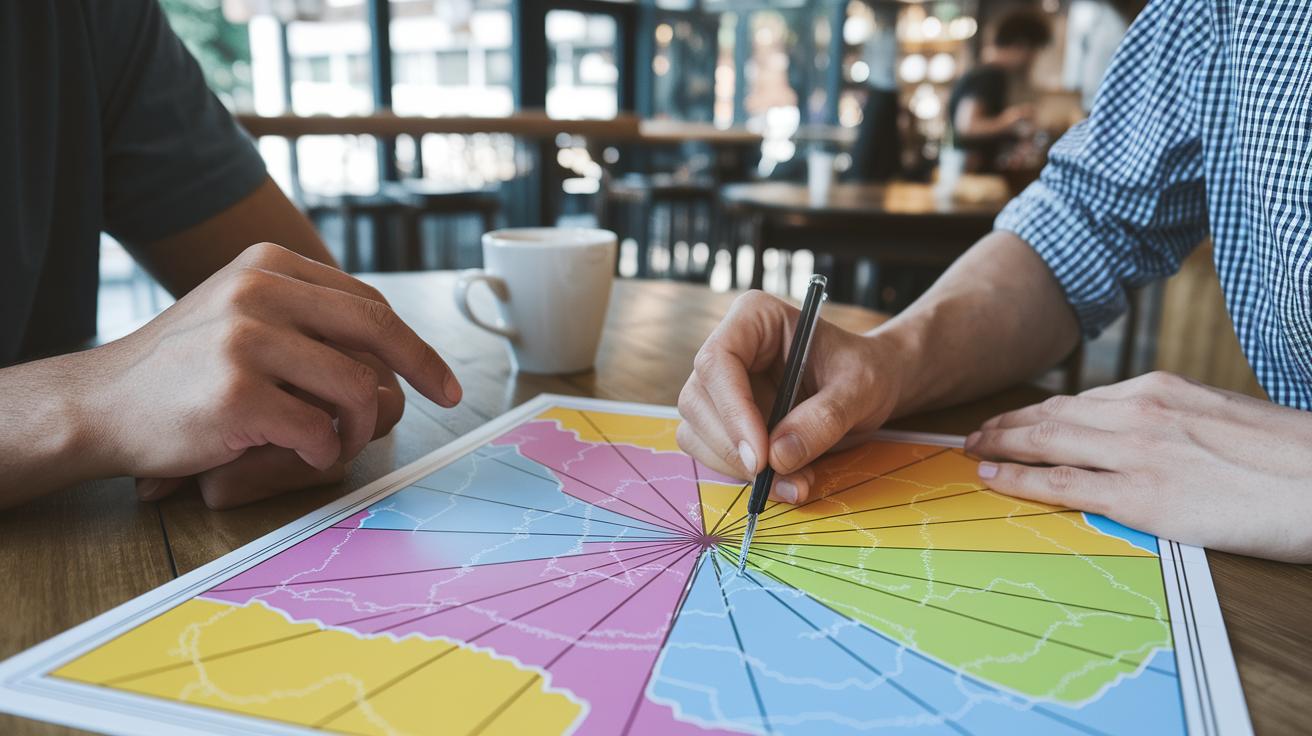
Every ten years, the U.S. Census shakes up how our districts are drawn. When population numbers shift, states redraw Congressional and local districts to keep things balanced. This system is meant to ensure every vote counts, but too often, it gets twisted for political gain, favoring one party over the other.
Back in the 19th century, early political skirmishes set the stage. In 1812, a notorious case brought about strangely shaped districts that many still talk about today. It was then that the practice of bending district lines for party advantage became common, sparking debates over whether these maps truly represent local communities.
As the 20th century rolled on, changing population data and shifting political tides made redistricting even more complicated. Lawmakers began using new methods to maintain power while wrapping their moves in a guise of fairness (redistricting is simply redrawing district boundaries). Even though the goal was equal representation, many voters felt their voices were getting lost in the shuffle.
More recently, cases like Rucho v Common Cause have added a fresh twist. Demographic changes and strategic redistricting continue to reshape our political landscape. It’s a vivid reminder that what might seem like a simple map change can have huge effects on our democracy.
Common Political Gerrymandering Techniques
Political gerrymandering is when district lines are drawn in tricky ways to help one party win more seats. One common trick is called cracking. This means splitting voters who lean toward the other party across several districts, reducing their overall impact. Another method, packing, squeezes those same voters into a single district so they have less power around them. There’s also stacking, where lawmakers group similar kinds of voters together to weaken the opposition. And then there’s racial gerrymandering, where district borders are drawn intentionally to either dilute or boost the voting power of certain racial groups.
These tactics change the true balance of political influence in our communities and make votes count differently from one district to the next. Even though redistricting should keep representation fair, using it for political gain damages trust in the process.
- Cracking: Dividing voters who favor the opposing party into several districts to weaken their impact.
- Packing: Grouping many opposition voters in one district so they lose influence in surrounding areas.
- Stacking: Combining groups with similar backgrounds to lessen the power of opposing voters.
- Racial Gerrymandering: Adjusting district lines to either lower or enhance the voting strength of specific racial groups.
- Boundary Bias: Shaping district borders to consistently favor one political side over another.
Consequences of Political Gerrymandering on Representation

When district lines are redrawn to favor one group, it really tilts the balance of power. This means that many communities, especially those in poorer areas and communities of color, find that their votes count for less. Even if the overall state votes lean one way, the way districts are set up can make the results look very different. It’s hard not to feel that something’s off when so many people end up left out.
Redrawn maps also chip away at public trust in our voting system. You might see a strangely shaped district and immediately think, "This doesn't seem fair," and you’re not alone. The bizarre outlines can make it nearly impossible for every vote to be equal, leaving many voters feeling both alienated and undervalued.
Ultimately, when large groups of people feel underrepresented, it weakens our whole political system. It’s not just about numbers, it’s about making sure everyone feels heard and respected in the process.
Legal Battles Over Political Gerrymandering
Redistricting is meant to make sure every vote counts equally, but sometimes the lines are redrawn to help one party more than the other. When that happens, courts step in like a referee in a tough game. Judges look carefully to see if the new district maps treat everyone fairly under the law and if the political lines have gone too far.
Often, legal battles start when people feel that these altered maps mess with fair representation and weaken their political voice. Courts then dig into whether these changes have a real, valid purpose or if they’re just a way to give one side an extra boost. Recent cases have shown that even when similar methods are used, the outcomes can be very different. Some courts have even told lawmakers to go back to the drawing board because certain boundaries broke the rules, while other decisions have sparked debates over whether federal courts should even be involved in what many see as a state issue.
As judges’ openness to these challenges shifts, the legal tug-of-war reminds us that there's a delicate balance between political strategy and our constitutional rights. It’s a vivid example of how our system has to keep checking itself to make sure every citizen is fairly represented, proving that even in politics, the fight for fairness is never quite over.
Reform Strategies to Tackle Political Gerrymandering

Citizens play a key role in pushing change by holding state lawmakers accountable and joining local meetings. Many people go to town halls to demand fair, clear rules for drawing district lines. One writer pointed out an interesting fact: before these reforms, boundaries were set in secret, leaving communities in the dark about how their votes were being steered. This drive for openness is now central to modern reform efforts.
Independent mapping commissions are becoming a trusted solution to reduce bias in drawing electoral boundaries. These nonpartisan groups use data (factual information) and algorithms (step-by-step computer processes) to design districts so no single party can dominate. With transparent map-making, every citizen can see how new boundaries are created. Thanks to recent laws, this system is on the rise, if you’re curious, check out an analysis of recent electoral law changes that explains how these measures empower independent commissions.
Another promising approach is bipartisan redistricting, where lawmakers from different parties work together on fair maps. Policy debates now stress the need for district designs that truly reflect community interests. Citizens, experts, and local officials are joining forces to break old, manipulative patterns and restore fairness. With a renewed focus on these reform strategies, we might rebuild trust in our democracy and ensure every vote counts.
Case Studies in Political Gerrymandering
Lately, political gerrymandering has grabbed a lot of attention. We see examples of how politicians redraw district lines to change the balance of power. In North Carolina, for instance, boundaries are drawn in a way that splits opposition groups, weakening their vote. Over in Michigan, officials have used a stacking tactic to give their side an advantage by grouping certain voters into key districts. And in Arizona, the redistricting battles have sparked heated public debates, with critics noting that oddly shaped districts hide unfair power plays.
These cases aren’t just about drawing new maps, they shake up how communities get represented. When district lines shift in secret or for partisan benefit, voters end up feeling disconnected from their representatives. It raises important questions about fairness and accountability. If redistricting happens without clear, clean standards, our trust in the process begins to wear thin. Clearly, what’s needed is a transparent and evidence-based approach that reflects the true makeup of our neighborhoods instead of just political interests.
| State/Case | Technique Used | Outcome |
|---|---|---|
| North Carolina | Cracking and Packing | Court-ordered redistricting |
| Michigan | Stacking | Maintained partisan edge |
| Arizona | Boundary Manipulation | Legal challenges, public outcry |
Final Words
In the action, this article broke down political gerrymandering and showed how twisted district lines shape our elections. We explored its roots, outlined common techniques like cracking, packing, and stacking, and discussed their effects on voter power. The legal battles and reform strategies guide us toward fairer maps. Case studies highlighted real-world impacts while reminding us to stay informed. Keep an eye on these shifts because understanding how political gerrymandering works is key to ensuring every vote matters. Stay engaged and optimistic.
FAQ
What are some examples that illustrate gerrymandering?
The gerrymandering example shows how district lines get shaped to favor a party by splitting opposing voters or grouping them together. Common examples include oddly drawn districts that highlight this manipulation.
Which party does the most gerrymandering?
The which party question clarifies that both major parties use gerrymandering tactics. Recent analyses indicate that many Republican-led states have employed these methods more frequently, though Democratic examples exist as well.
Is gerrymandering legal?
The is gerrymandering legal answer reveals that while the practice is legal, it remains a hotly debated tactic. Courts have challenged certain maps, especially those affecting racial representation and equal voting rights.
What does racial gerrymandering involve?
The racial gerrymandering answer explains how district lines are deliberately drawn to dilute or concentrate the voting power of specific racial groups. Such practices often face legal scrutiny because they can undermine fair representation.
Why is gerrymandering a problem?
The why is gerrymandering a problem answer clarifies that it distorts fair voting power and reduces proper representation. This tactic can lead to voter disenfranchisement and a decline in public trust in the electoral system.
Why is it called gerrymandering?
The why is it called gerrymandering answer traces its name to Governor Elbridge Gerry’s 1812 redistricting in Massachusetts, where a salamander-shaped district spurred the portmanteau linking his name to the practice.
What is the purpose of gerrymandering?
The what is the purpose of gerrymandering answer indicates that its aim is to gain political advantage by drawing district boundaries in a way that secures more seats for one party, often undermining fair electoral competition.


